HISTORY of SECTION 15
As with most sections located outside the City of Chicago, the story of Section 15 is deeply intertwined with that of the small town in which it was founded. Many of the 313 men who comprised Section 15 were also elected or appointed to lead their fellow citizens in government, commerce, and the everyday affairs of Niles Center, Illinois.
The life of Section 15 is reflected in the lives of its brothers, and this essay serves as a celebration of their accomplishments.
The Township of Niles was organized in 1850. Under the Basic Land Ordinance of 1785, each township measured six miles square. Near the geographical center of this township, a few hardy settlers established what would become the Village of Niles Center. Although the first white settlers arrived in the area in 1834, the village was not incorporated until 1888, less than one year after the founding of the Luxembourg Brotherhood in Chicago. For the next hundred years, their paths would move forward side by side.
The first permanent settlers—John Planch and the Ebinger brothers—reportedly came from Germany in the 1830s. Migration steadily increased the area’s population. Heinrich “Henry” Harms, patriarch of the Harms family, arrived from Germany in 1851; two of his descendants, Edward H. and Percy, would later join Section 15. In 1864, George C. Klehm came to Niles Township and married Heinrich’s sister, Eliza (also known as Louise). One of their descendants, Harold—known as “Holly”—became a member in 1935 and went on to operate a successful dry-cleaning business for many years. In the late 1930s, Holly became a director of the Niles Center State Bank (now First National Bank of Skokie), one of eight Section 15 members to hold that position during the bank’s 80-year history.
In 1869, Ivan Paroubek Sr. emigrated from Bohemia and settled in Niles Township. A harness maker by trade, he opened a shop at 8041 Lincoln Avenue. Two of his sons, Anthony and Ivan M., became members in 1909 and 1919, respectively. Another notable arrival was Peter Blameuser Jr., who emigrated in 1852 from the Alsace-Lorraine region on the Franco-Prussian border. Before settling in Niles Township in 1865, he had traveled west and joined a vigilante group that executed 33 men convicted of various crimes. His son, Peter Blameuser III, born in Niles Township in 1866, would become the third Village President of Niles Center in 1895. His grandson, George E., originally a member of Section 8, transferred to Section 15 in 1961, followed by his great-grandson, George P., who also joined that same year.
Why did these pioneers come to the area? Two key reasons stand out: the availability of inexpensive land for establishing homes and farms, and proximity to Chicago markets. The Harms, Klehm, Paroubek, and Blameuser families became merchants, bakers, and innkeepers, serving the growing population of farmers and flower growers who would dominate the region for the next sixty years. Section 15 would draw much of its strength from these two groups.
In early 1888, an election was held to decide whether the community wished to incorporate. By a vote of 14 in favor and 61 opposed, the citizens approved incorporation. An organizational meeting was held at the firehouse on April 23, 1888, and the first ordinance—regulating the use of streets—was passed on April 30. Adam Harrer was elected the first Village President. Among the four trustees were Peter Blameuser Jr. and Ivan Paroubek Sr.
During this period, the Village became a hub for area farmers. On the first Tuesday and third Thursday of each month, they gathered at Lincoln and Oakton Streets, lining both sides of Lincoln Avenue north to St. Peter’s Catholic Church and around the cemetery to Market Street (now Searle Parkway), selling vegetables and flowers. Merchants from Chicago, McHenry, and Kane counties would also attend to peddle their goods. This vibrant marketplace continued until around 1920.
In 1940, the Village of Niles Center officially adopted the name Skokie. In this text, “Niles Center” refers to the period before 1941, while “Skokie” refers to the period thereafter.
By 1900, Niles Center had elected four Village Presidents—Adam Harrer, John W. Brown, Peter Blameuser III, and Dr. George Sintzel—and had reached a population of 529. Among the names recorded in that year’s census were the following:
| Michael S. Conrad | Nick Hermes | John Kalmes | Joe Puetz |
| Peter Dahm | Henry Hermes | Anton Krier, Sr. | Nicolas Schaefer |
| Anton Doetsch | Joseph Hohs | Michael Leider | John P. Schaul |
| Gustave Frisch | Peter A. Hohs | August Luettig | John Wagner |
| William Hensel | Frank Hoveley | Peter Puetz | J.P. Wagner |
| Michael Hermes |
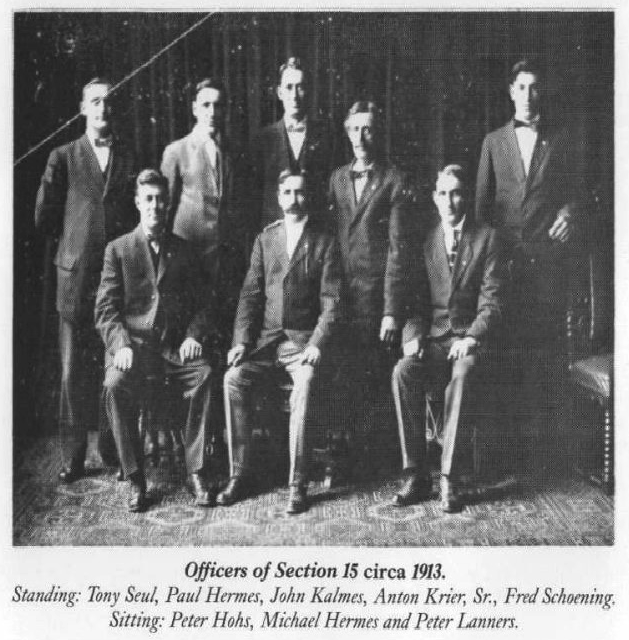
On July 21, 1905, these men were admitted to the Luxembourg Brotherhood of America and received into the Grand Lodge as Section 15. Grand President Mathew Huss and Grand Secretary Nick Niles installed the following men as the first officers of Section 15.
| President | Joseph Hohs |
| Vice-President | Michael Leider |
| Recording Secretary | John Kalmes |
| Financial Secretary | Peter Hohs |
| Treasurer | John P. Schaul |
| Trustee | Anton Krier, Sr. |
| Trustee | Michael Hermes |
| Trustee | Frank Hoveley |
| Marshall | Peter Puetz |
Of the twenty-one charter members, eleven listed their birthplaces as Luxembourg (Eschdorf, Arlons, Heispelt, Roullingen, Medingen, Hersdorf, and Welscheid), and three listed Niles Center (Michael S. Conrad, John Kalmes, and Peter B. Dahm). Of the occupations listed, 18 identified themselves as gardeners, 2 as saloonkeepers (Michael S. Conrad and Joseph Hohs), and 1 as a laborer (Nicholas Schaefer).
The predominance of gardeners among these first twenty-one members clearly indicates the rural, agrarian society that characterized the area at the turn of the century and reflects the social conditions from which these men emigrated. An examination of the occupational listings of the 313 members of this Section reveals that sixty-eight listed their occupation as gardener, farmer, or nursery worker. The next most common occupation, with twenty-four members, was salesman.
Section meetings were initially held at the tavern owned by Peter A. Hohs, brother of the first president, Joseph Hohs. Their father, Jacob, was born in Nilder Kor, Luxembourg, and immigrated to America circa 1850. Both brothers were born in Oconto, Wisconsin, and came to this area with their father in 1882. Although Peter A. listed his occupation as gardener, he owned the aforementioned tavern, which was located north of present-day Terminal Park on the east side of Gross Point Road, south of Golf Road, in the Sharp Corner area.
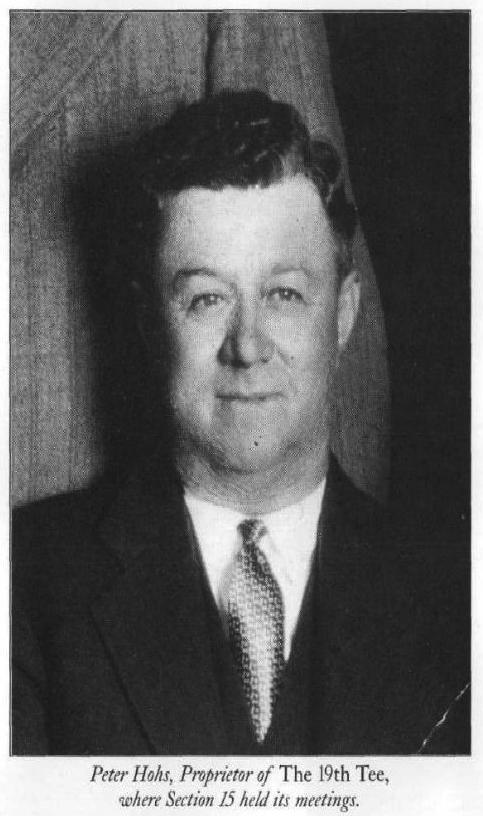
In the author’s interview with Brother Francis Pat Seul, who joined the Section in February 1928, Seul stated that he attended Section meetings at the Hohs tavern well into the 1950s. However, the tavern was then under different management. In addition to his duties as tavern owner, Peter A. founded the Sharp Corner Fire Department and became a director of the Niles Center National Bank.
An interesting note pertains to President Joseph Hohs. In the membership book, his last name is spelled Hoss. This discrepancy was explained by Peter’s son, Bernard Hohs, late of Skokie, who informed the author that Joseph returned to Luxembourg and reported to the family that their surname had been misspelled and that the correct spelling was Hoss. Thereafter, various family members used different spellings of the surname. Peter advertised in the 1911 Schobermesse Book under the spelling Hoss, although in the 1916 Schobermesse Book, he used Hohs. His gravestone bears the spelling Hoss.
The area known as Sharp Corner was situated north of present-day Church Street and derived its name from the intersection of Gross Point Road and Niles Center Road. The area was annexed by Niles Center in 1926.
The first Recording Secretary of Section 15 was John Kalmes. He was born in Niles Center and farmed land on which Skokie Valley Hospital is presently situated. Given the proximity of his homestead to the Hohs property, it is not surprising that he married Barbara Hohs, Peter A.’s daughter. They had twelve children, three of whom—Nicholas, Jacob, and Peter—would later join Section 15. In addition to his duties as Recording Secretary, John Kalmes served as an elected Park Commissioner for thirteen years (1928–1941) and also worked for the Park District. On May 23, 1949, John Kalmes was killed in a car accident at the age of sixty-five.
The Hermes family played a prominent role in the formative years of the Section. Johann Hermes (married to Catherine Weber) immigrated to the United States from Eschdorf, Luxembourg, circa 1897. Shortly thereafter, Johann established greenhouses in the Sharp Corner area adjacent to the Kalmes property, between Gross Point Road and Keeler Avenue, north of Grant Street. All five of his sons—Henry, Joseph, Michael (married to Ernestene Scharres), Nick (married to Josephine Doetsch), and Paul (married to Anna Flam)—became members of Section 15, with Henry, Nick, and Michael being charter members. Michael would become President of the Section in 1913. Paul joined Section 21 in 1907, served as its first Recording Secretary, transferred to Section 15 in 1912, and served as its Recording Secretary from 1913 until his retirement in 1962.
All five of Hermes’ sons were active in the growing greenhouse industry of Niles Center. Michael, Paul, and Nick operated greenhouses side by side on a triangular parcel of land at Gross Point Road and Keeler Avenue. Henry and Joseph, neither of whom married, worked for their brothers in the greenhouses.
Although the minutes for meetings held between 1905 and November 1932 have been lost, the minute book beginning December 10, 1932, shows that the minutes were recorded by Paul Hermes in German. This was likely a matter of convenience, as Brother Pat Seul recalled that meetings were conducted in English. Beginning with the Section meeting on August 9, 1935, the minutes were recorded in English.
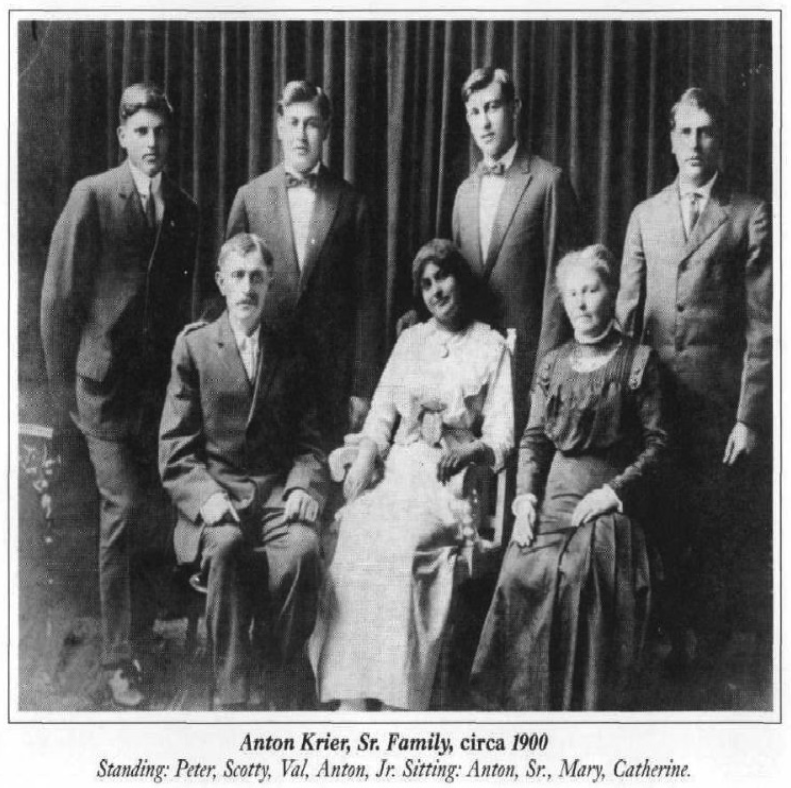
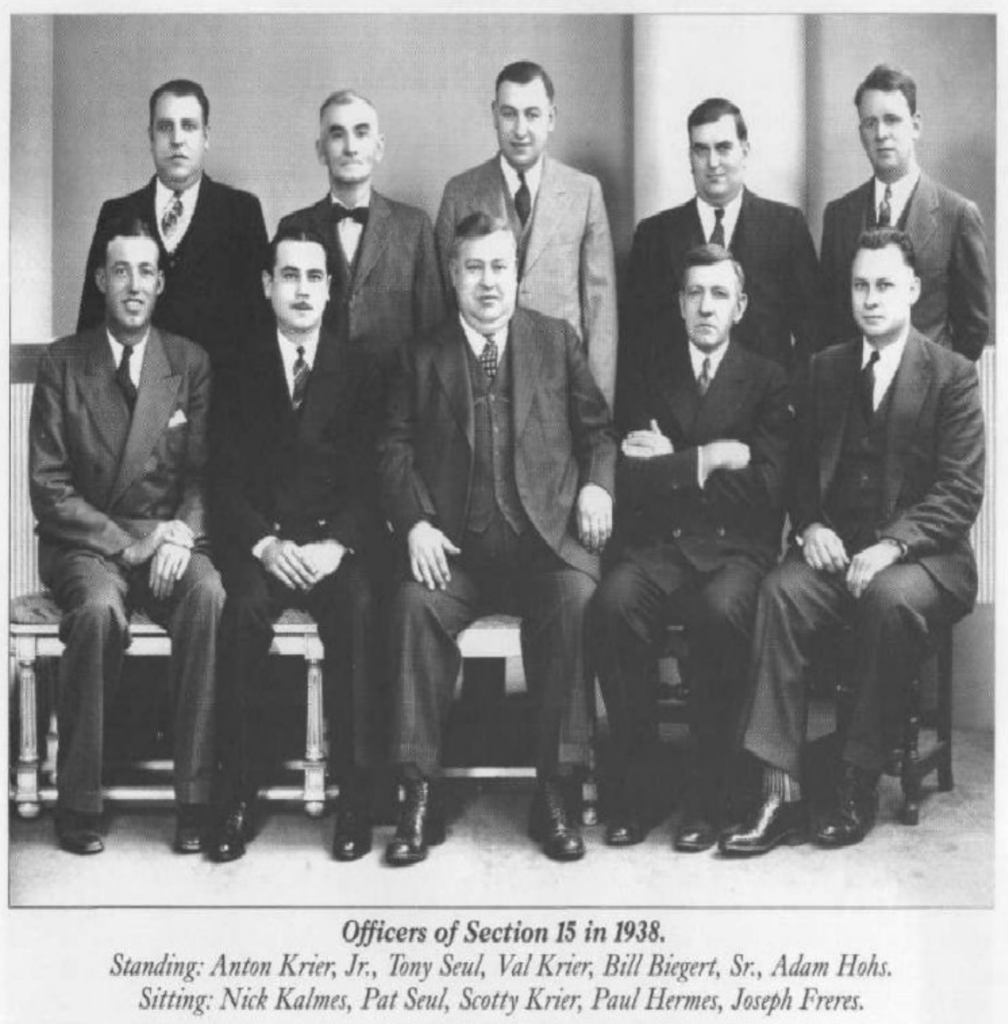
Anton Krier, Sr., immigrated to the United States from Luxembourg in 1876. He initially settled on a farm located at Clark and Bryn Mawr Avenues in Chicago. By 1892, he had purchased ten acres of land at the northeast corner of Gross Point Road and Niles Center Road, in the Sharp Corner area that was also home to the Hohs and Kalmes families. Anton farmed the land and sold produce at the Randolph Street market in Chicago. In 1890, Anton’s eldest child, Martin “Scotty” Krier, was born, followed by Valentine, Anton Jr., and Peter, all of whom would later become members of Section 15. Scotty Krier would become President of the Section in 1935.
At the initial installation of officers, Anton Krier, Sr., the oldest of the charter members, was elected to the post of Trustee. By 1913, he was Vice President and became President in 1927 following the death of Michael Hermes.
As an aside, the position of Trustee was created by the Constitution of the Brotherhood to oversee the financial assets of each Section. The initial Trustees of Section 15, in addition to Anton Krier, Sr., were Michael Hermes and Frank Hoveley.
As previously noted, there were twelve charter members of Section 15. Before the end of the year, six additional men joined the Section. They were, in order of admission: Anton “Tony” Seul, George Busscher Jr., Charles Fremgen, Frank Morette, Fred Schoening, and Joseph Haupt.
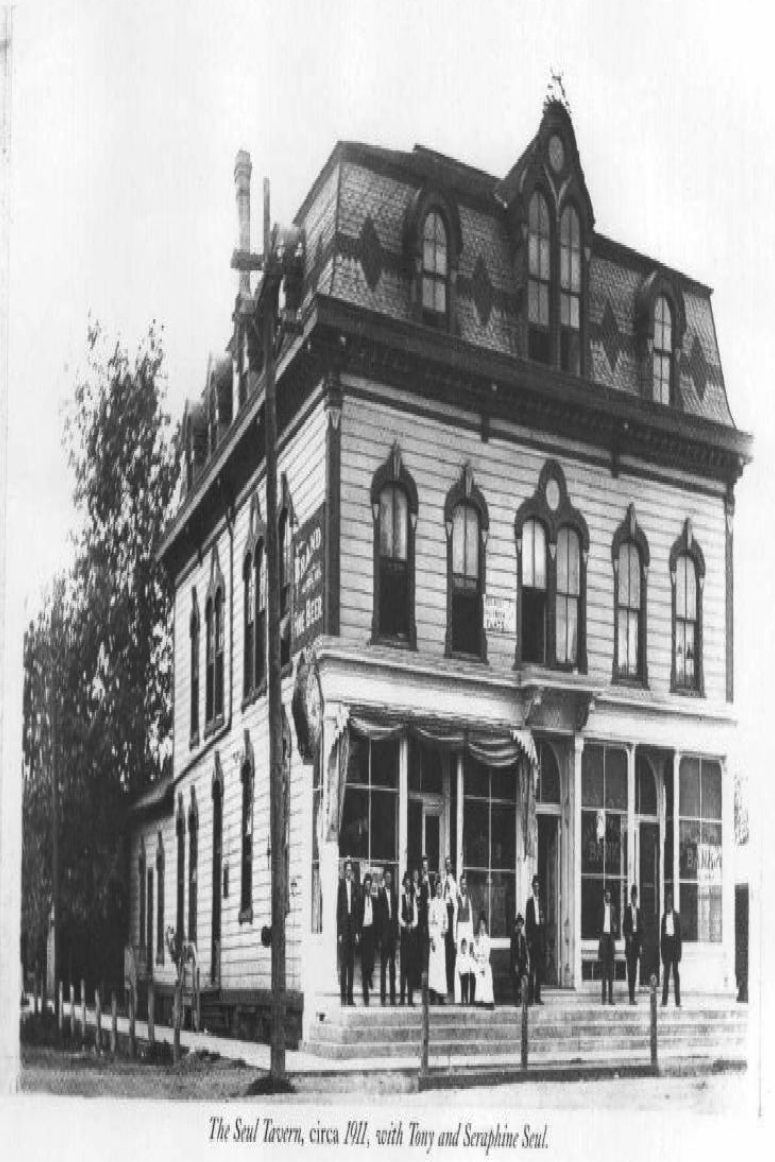
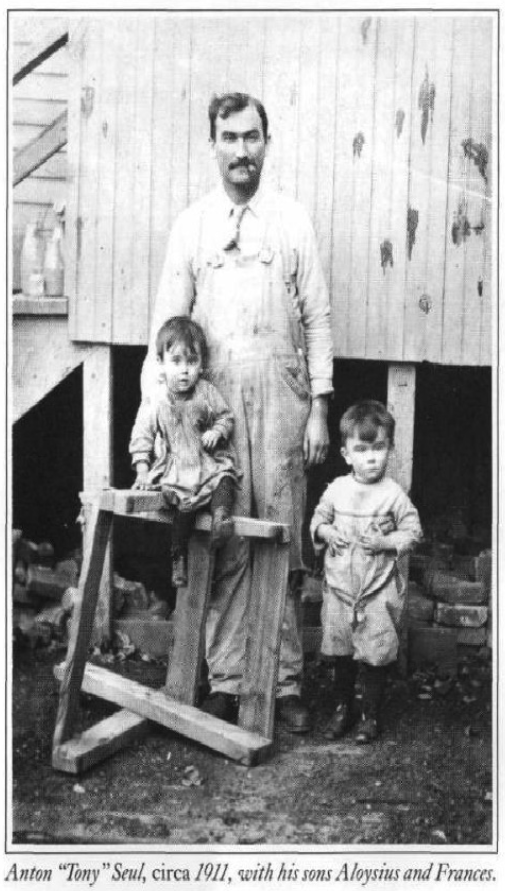
Anton “Tony” Seul (married to Seraphine Freres) was born in Northfield, Illinois, in either 1876 or 1877. Circa 1900, he began working as a bakery wagon driver for the Niles Center Bakery, owned by his brother John. John’s bakery was located immediately south of St. Peter’s Catholic Cemetery, on the site that is now the parking lot for Haben’s Funeral Home. While driving the bakery wagon, Tony regularly stopped in Tessville (now Lincolnwood, Illinois) and called on the Freres family. In 1906 or 1907, he married Seraphine Freres. Three of their sons—Francis Pat Seul, Rudolph, and Erwin—would later join the Section.
After marrying, the Seuls lived adjacent to John’s bakery. In 1907, Tony entered the tavern business at a location owned by Peter Blameuser III, at the northwest corner of Lincoln and Oakton Avenues, now the site of Desiree Restaurant.
In the same building to the north was the original location of the Niles Center State Bank, which was to become the First National Bank of Skokie in 1946.
The Seul business consisted of a bar, restaurant, and three boarding rooms available on the second floor. A three-room apartment rented for $10.00 per month. The restaurant earned its proprietor a certain measure of local fame for its potato pancakes, which were served as a luncheon special on Fridays. Dinners cost 25 cents, and fish fries for the local Catholic population were very popular. Tony Seul personally caught the fish in Wilmette Harbor.
During the Christmas season, the house bought the first round of drinks for each customer, and special “health” concoctions were brewed during the Easter season.
It has been commonly reported by the old-timers that downtown Niles Center was often used as a background setting for motion pictures. The author’s knowledge of this history generally came by word of mouth. However, the newspaper report from which this information about Tony Seul was taken confirmed what had been told to the author orally. This report continued:
Tony remembers one day in 1912 when the movie men came into his place, had a round of drinks, and gave him some tickets for the picture they were about to film. At the start of this melodrama, the actors staged a fearless bank robbery in the Niles Center State Bank and then ran across the street, where their horses were stamping against the ties that held them to their hitching posts. In a blaze of shots and frenzy, they were off. One of the horses stumbled and fell upon its unfortunate rider, who was fatally injured.
After the wounded man had been driven away to St. Francis Hospital, the producers came back into Tony’s and asked for the movie tickets because, they explained, “this won’t even be a picture.”
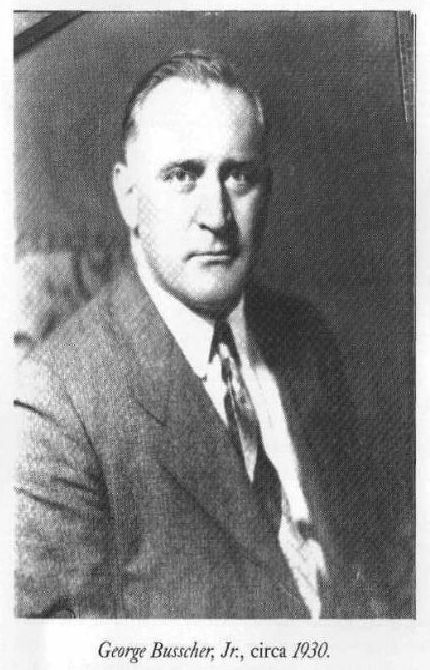
George Busscher, Sr. (married to Mary Dillman), emigrated from the Netherlands in 1873. By 1879, he had settled in Niles Township and started a blacksmith shop. His son, George Busscher, Jr., was the 23rd member of Section 15 and perhaps embodied the concept of civic and business leadership better than anyone else. Born in 1879, George Jr. was one of six children who survived to adulthood. In approximately 1904, George Jr. married Ivan Paroubek’s daughter, Katherine. Together, they would have seven children, two of whom are still alive.
By 1909, at the age of thirty, George Jr. had established his business. An advertisement in the 1909 Schobermesse book described him as a “Dealer in wagons, buggies, farm implements, sewing machines, roofing and sheeting papers, glass, paints, etc.” If the customer desired, Busscher could shoe his horse or build him a wagon or carriage. To contact the business, one could, of course, drop by the establishment, or one could telephone Niles Center 224.
This advertisement was the first of many that the Busscher family would run in the Schobermesse program books. The Schobermesse—the fall festival—was begun by Section 3 of the Luxembourg Brotherhood in 1904. Until 1967, when the last Schobermesse was held, the Busscher and Lies families advertised yearly and remained very supportive of the Luxembourg community of greater Chicago.
In 1911, George teamed up with his brother-in-law, Anthony Paroubek, to form a partnership known as the Niles Center Mercantile Company (not incorporated). The products sold at the store did not vary greatly from those offered in 1909, but they did advertise “trunks and bags.” The telephone number was also changed to Niles Center 28. J. Anthony Paroubek had previously joined the Section in 1909.
By 1916, the store was firmly located at 8045 Lincoln Avenue, the present site of the Handelman Photographic Studio. The book Niles Township, published circa 1916 by E. Pamela Beudete, contains a sketch of this building and one to the north.
The northern building was constructed in 1874 and was the site of the Niles Center Meat Market, owned by Michael Harrer. The Niles Center Mercantile Company used it for storage from 1916 until 1947, when the business was relocated to its present location at 5035 Oakton Street (the Skokie Ace Hardware). In 1983–84, this building was restored by the Haben family as a single-family residence and was placed on the National Register of Historic Landmarks.
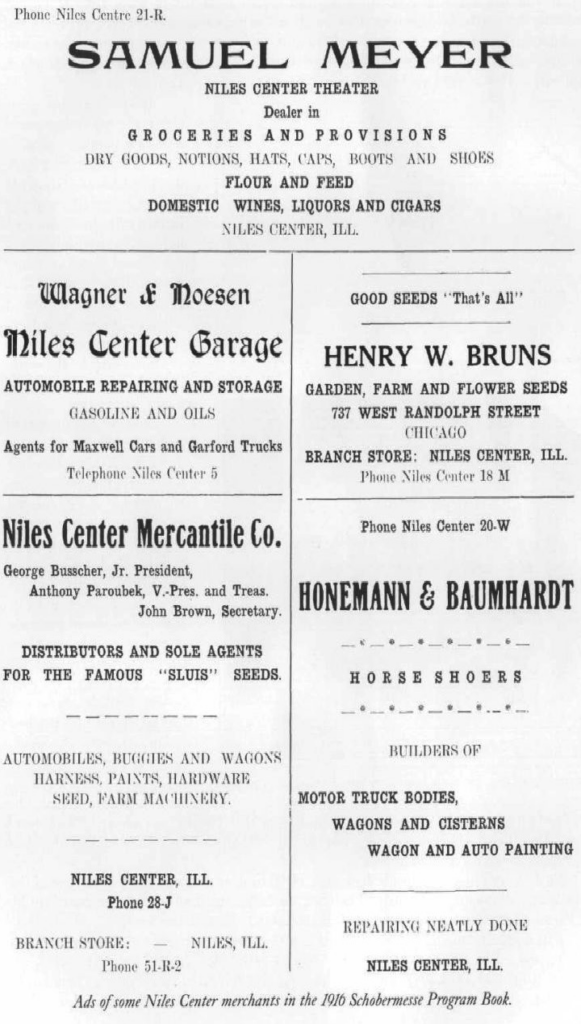
In 1916, the partnership of Busscher and Paroubek had ceased, and the firm had incorporated. George Busscher was president, and Anthony Paroubek was vice president and treasurer.
By 1924, one could buy genuine Ford auto parts, Columbia graphophones, and records. By 1928, the store had added Whirlpool washers to its stock. If a change in telephone numbers is indicative of the growth of the community, the Niles Center Mercantile Company was growing as well, for the telephone numbers during this period were Niles Center 58 and Niles Center 1, and in 1929 were changed once again to accommodate two lines—Niles Center 700 and 701.
George Busscher, Jr.’s activities were not limited to running the hardware business. In 1904, he was elected to the office of village clerk, which he held until 1909, when his partner and brother-in-law, Anthony Paroubek, succeeded him. In addition, in 1916 he was postmaster of the village, and prior thereto he had been elected director of the Niles Center State Bank, the first of eight Section 15 brothers to hold that distinguished position. In 1927, he was elected the first president of the Niles Center Businessmen’s Club, the forerunner of the Chamber of Commerce. In 1934, George Busscher, Jr. passed away, having had a significant impact on early Niles Center.
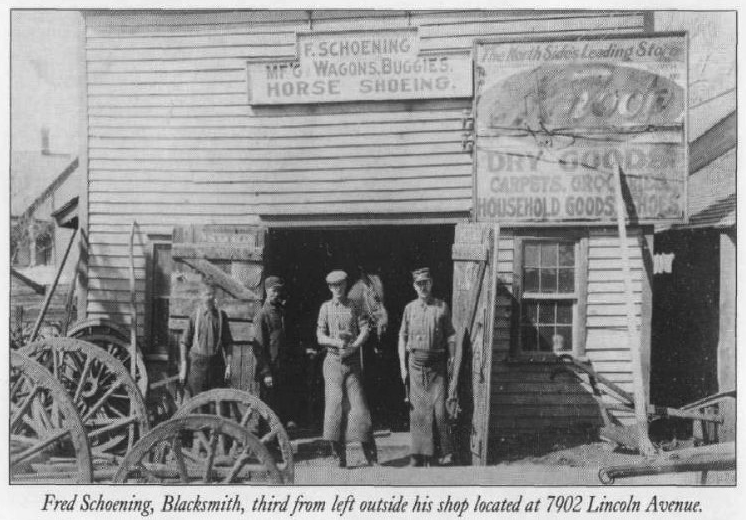
Fred Schoening joined Section 15 on October 1, 1905. He listed his occupation as a blacksmith. In the 1919 Schobermesse Book, he advertised that he was still in the business of horseshoeing, although by that time he had expanded his business to include the repair of automobile bodies and water cisterns. General jobbing was done to order. In 1922, he was selling “Deering Mowers.” His shop was located at Lincoln Avenue and Main Street and could be telephoned at Niles Center 16 W (1919), 48 W (1922), and in 1926, one could reach him at his residence—48 M. Fred died in 1940.
Peter Blameuser III joined the Section in 1906 at the age of forty. Although his father, Peter Blameuser, Jr., had emigrated from the Franco-Prussian border area of Alsace-Lorraine, Peter III, and many like him who were not of Luxembourg origin, felt a kinship with those who were. Some reasons for this affinity are obvious; some are not. For example, Luxembourg shares a common border with Germany, France, and Belgium. The Luxembourg nation in 1840 was economically and politically linked to Germany and was part of the Germanic Confederation and Customs Union (Zollverein). Within Luxembourg City, a Prussian garrison was stationed.
The Luxembourg language or dialect (Lëtzebuergesch) is of German origin. The Luxembourg dialect is spoken only and is never written. This explains why the Schobermesse program books, dating until the mid-thirties, were written in German, as were the minutes of Section 15 until 1935.
In addition, as the great European migration to America was underway, many of those who came to America from Luxembourg were classified by immigration officials as having come from Germany, either out of pique, bias, or ignorance.
Given the geographical and cultural ties existing between the early German pioneers and the newly arriving Luxembourg immigrants, it is easy to understand why those not of Luxembourg origin would join a Luxembourg group. In addition, many of the early pioneers heretofore mentioned shared the Catholic faith practiced by the Luxembourgers. St. Peter’s Catholic Church would be the focal point of their religious life. It made good business and political sense.
Peter Blameuser III (married to Clara Hoffman) was born in Niles Township in 1866. His father, Peter Jr., purchased the Bergmann Building in 1876, which was then located at the northwest corner of Lincoln and Oakton Streets. A tavern was established there and would later be run by Peter III before the business was sold to Tony Seul in 1907.
The Blameuser tavern sold Anheuser-Busch products, including Michelob. A specialty of the house was Dennehy’s Underoof. Peter III advertised his location as Niles Centre (Cook County), Illinois. The British spelling of Centre was not uncommon in the early years of the village, though Center was most often used, especially after the telephone company adopted the American version. A business card used by Peter III had the following printed on the reverse:
Tennyson could take a worthless sheet of paper, write a poem on it, and make it worth $25,000.00- That’s genius. Vanderbilt can write a few words on a sheet of paper and make it worth $5,000,000.00 – That’s capital. The United States can take an ounce and a quarter of gold and stamp upon it an eagle, and make it worth $20.00 – That’s money. A mechanic can take material worth $5.00 and make ti into watch springs worth $500.00- That’s skill. A merchant can take an article worth 75 cents and sell it for $1.25 – That’s business. A ditch digger works 8 hours a day, handling several tons of earth for $1.50 – That’s labor. The printer of this card can write a check for $50,000.00, and it would not be worth a dime. That’s tough. A lady could purchase a 75-cent hat, but prefers one worth $27.00 – That’s nonsense. For Michelob Beer and Underoof Rye go to Peter Blameuser – That’s sense.
After selling the tavern business to Tony Seul in 1907, Peter I, along with the Springer family, began a business that would become known as the Niles Center Coal and Material Company. The business was located west of and adjacent to the Chicago and Northwestern Railroad tracks on the south side of Oakton Street. The business was still flourishing in the early 1960s under the leadership of Peter’s son, George E., and daughter, Frances Blameuser Dockendorff.
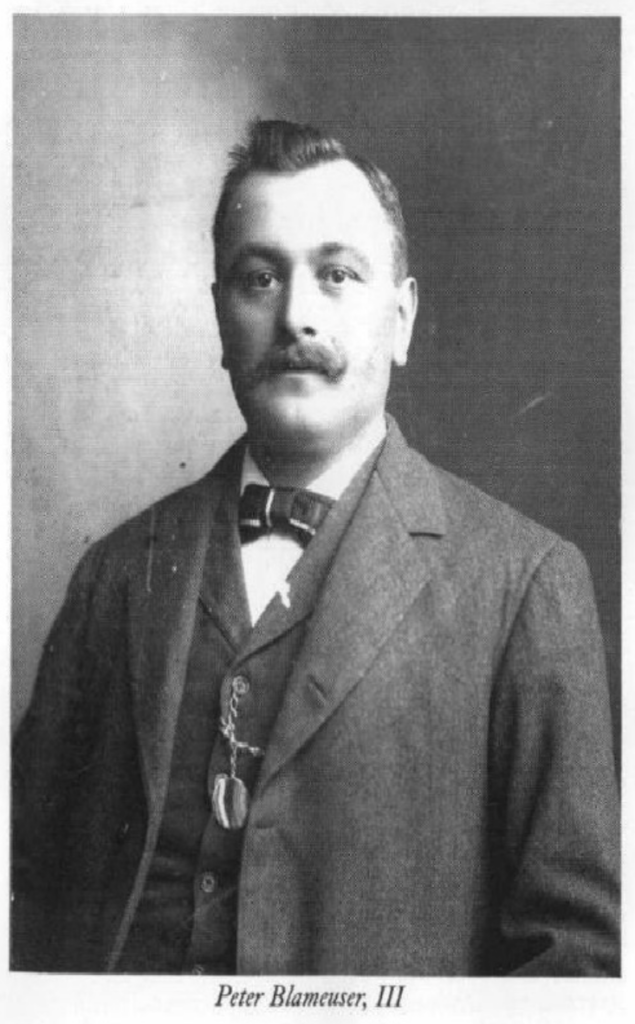
From 1890 to 1894, Peter Blameuser III held the office of village clerk and then succeeded John W. Brown as village president in 1895. In 1907, at the age of forty-one, Peter Blameuser III was thrown from a horse and killed. He was the first member of Section 15 to pass away.
In late 1906 and 1907, the Section added five new members. They were Peter Lanners, his brother Peter A. Lanners, and the Risch boys—Michael, John, and Mathew. All five listed their occupations as gardener or farmer, and all five had been born in Luxembourg—Lanners in Elsdorf and the Rischs in Muehlenbach. Peter A. Lanners would die on August 12, 1923.
In 1908, no new members were inducted. In 1909, seven new members were added: Frank Morrette, Olaf E. Sandberg, Anthony Paroubek, Joseph Wieskewski, John Boba, Fred J. C. Kruse, and Rudolph V. Sintzel. Anthony Paroubek and “Doc” Sintzel were the only ones to remain in the Section for any length of time, the others having been suspended for falling into arrears by March 1910.
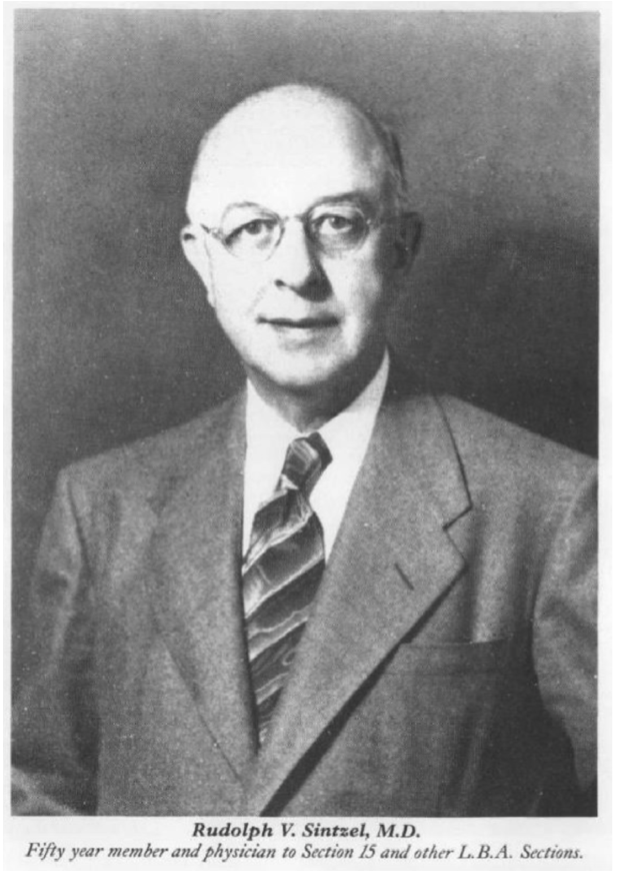
Rudolph V. Sintzel, M.D., was the son of George Sintzel, M.D., who had served as village president of Niles Center from 1897 to 1909. On the staff of Evanston Hospital, he was known as “Doc” Sintzel to his friends and neighbors and provided medical examinations not only to all new members of Section 15, but also to the other sections of the L.B.A. The expense book for the year 1938 shows that Doc Sintzel received $1.00 for each medical examination given. In 1960, Doc Sintzel began his fiftieth year as a member of Section 15 and was no longer obligated to pay dues.
His early years in Niles Center were spent at 8142 Lincoln Avenue, after which he moved to Beckwith Road in Morton Grove. He also served on the board of directors of the Niles Center State Bank in the 1940s and 1950s and, in 1936, was chosen to head the Niles Center Health Department. Doc Sintzel remained a member in good standing until he died in 1964 and was survived by his second wife, Loraine Hoffman Paroubek Sintzel, the widow of Anthony Paroubek.
During the period from 1911 through 1914, twelve men joined Section 15. They were Charles Hohs, Martin Heisler, Valentine Krier, Joseph Hermes, William L. Wagner, Peter Dechambre, Paul Hermes, Peter B. Dahm, George Matchen, Henry Thilges, Martin “Scotty” Krier, and Anton Krier, Jr. Charles Hohs was the brother of Joseph and Peter A. Hohs. In the membership book, his name was spelled Hohs. He was employed by the City of Evanston.
One of the benefits of joining the Luxembourg Brotherhood was that a member received a life insurance policy. In 1914, the death benefit was $125.00. Upon joining the Section, a member’s beneficiary was listed in the membership book. Marty Heisler, who was born in Riedheim, Germany, in 1880, must have been a bachelor when he joined, because he named Peter Hohs as his beneficiary.
It was during this period that three of Anton Krier’s sons joined Section 15. Valentine, who was born in Niles Center, described his occupation as “farmer.” Scotty listed his occupation as “milk driver route foreman,” and Anton Jr. listed his as gardener. At that time, the only one who was married was Scotty, as the other two listed their parents as beneficiaries of the death policy. Anton Sr.’s fourth son, Peter, would join in 1919.
Of all the men who joined Section 15, Scotty was probably the most well-known Section member in Niles Township. Before he died in 1966, he would become an owner of a well-known restaurant in downtown Niles Center and was, at various times, a gamekeeper, Section president, sports patron, and Democratic committeeman of Niles Township.
As a pupil at St. Peter’s Grammar School in Niles Center, Martin Krier’s schoolmates gave him the nickname “Scotty,” which was derived from the name the children used for a neighbor who passed the schoolyard every day. For reasons unknown, the moniker stuck, and for the rest of his life, Martin was known as Scotty.
As a child, he often missed school in the spring and fall so that he could help his father plant, harvest, and sell the produce grown on the farm. By 1914, however, Scotty had determined that farming was not for him. After several years away, he returned to Chicago and began taking grocery orders door to door. Soon thereafter, he obtained employment with the Wieland Dairy as a solicitor, troubleshooter, and route foreman.
In 1927, Scotty, his wife, Catherine Nusbaum Krier, and their five children moved to Niles Center from their North Side Chicago home. At approximately the same time, Scotty opened a restaurant at 8014 Lincoln Avenue with his brother, “Uncle Pet” Krier. In 1944, Section meetings were held at Scotty and Pete’s. They operated this restaurant until Scotty died in 1966.
In 1935, Scotty succeeded Ben Schaul as president of Section 15. He held that post from 1935 through 1939 and again in 1944–45. In his first year as president, sixty-six new brothers were inducted into the Section—the greatest number in any single year in its history. During his tenure, ninety-eight new members joined, thirteen of whom transferred from Section 25 in 1944.
In 1946, Scotty retired from the office of Section president for the second time to devote more time to his other affairs. In 1936, he had become the Democratic committeeman of Niles Township, a post he held until 1962, when he was succeeded by his son Raymond. He was also a patron of the Niles Center Athletic Club, which in 1941 became the Skokie Indians, an accomplished semi-professional baseball club that played its home games at Oakton Park. Scotty’s three sons—Martin Jr. (Bud), Leroy, and Raymond—would join their father as Section members. In 1941, Bud pitched for the Chicago Cubs farm team in Janesville, Wisconsin, becoming the second Section member known to have played professional baseball.
Scotty’s brother, Val, whose nickname was “Hicks,” joined Section 15 prior to Scotty in 1911. He co-owned a grocery store in Chicago with Scotty before being called to serve in World War I. Sometime after 1926, Val succeeded Peter Hohs in operating the Hohs Tavern, which had been known as the 19th Tee. The Section continued to hold its meetings at the 19th Tee, which, under Krier’s stewardship, became known as the Hicks Krier Inn.
Another member who joined in 1912 was William L. Wagner. He operated a tavern located at Main and Market Streets in Niles Center and advertised fine wines, liquors, cigars, and tobacco. In the 1912 Schobermesse Book, he advertised the “Edelweiss Buffet.” One could telephone Bill Wagner at Niles Center 13-R. By 1913, he had expanded his business to include auctioneering, which, in his words, “were promptly attended to.” Bill Wagner died on June 19, 1916.
Ivan M. Paroubek, the baker and brother of Anthony Paroubek, joined Section 15 in 1919. Four years earlier, in 1915, he had purchased the John Seul Bakery. The following advertisement appeared in the 1916 Schobermesse Book:
Wedding orders our specialty.
Fancy cakes and pastry of all kinds.
The home of Paroubek’s Star Bread.
Rogers Park and South Evanston delivery.
Phone Niles Center 14-W, and our Wagon will call.
In 1946, Ivan M. relocated the store to 8044 Lincoln Avenue and operated it until he died in 1949. In the early 1980s, the Paroubek family sold the building and business to Thomas Vitello, who continues to operate a bakery at that location.
Like his father before him, Ivan M. participated in local affairs. Both Ivan Sr. and Ivan M. served as school trustees, the younger having been elected to the high school board in 1936 and re-elected in April 1939, defeating Paul Alen, also a member of Section 15. Ivan M. was also the second president of the Niles Center Businessmen’s Club, succeeding George Busscher Jr. in 1929.
The decade of the 1920s saw the addition of sons of several charter members. Peter A. Hohs’s son, Adam, joined in 1925. Tony Seul’s sons—Rudolph, Francis, and Erwin—joined in 1928 and 1929. John Kalmes’s sons, Nicholas and Jacob, joined in 1929.
The story of Francis “Pat” Seul (married to Josephine Arrigo) spans the last sixty years of Section 15’s history. He was born in Niles Center on April 21, 1909, and still resides in Skokie. He attended St. Peter’s Grammar School and assisted his father in the Seul Tavern. One of the early patrons of that tavern, Robert Hoffman—brother-in-law of Peter Blameuser I, assistant cashier at the Niles Center State Bank, village trustee from 1910 to 1929, and member of Section 15—bestowed upon Francis and his brothers nicknames that would last throughout their lives. Francis was baptized Francis Mathias Seul. When Hoffman patronized the tavern, he began calling the Seul brothers “Pat” (Francis), “Buddy” (Rudolph), “Mups” (Erwin), and “Olie” (Aloysius). To this day, Francis Seul is known as Pat to his friends; “Mathias” has been consigned to the dustbin of history.
As a young man, he was employed by the Vegetable Growers Supply Company, a business established in Morton Grove, Illinois, by Luxembourg truck farmers in 1919 to manufacture boxes for their produce. After several years in production, Pat began selling supplies to greenhouse owners in Chicago, Evanston, Niles Center, and Morton Grove.
In 1940, Pat was elected president of Section 15, succeeding Scotty Krier. In 1943, he and his brother Rudy were inducted into the United States Army. Pat was sent to Europe, and Rudy to the Pacific. While in Europe, Pat received one overseas bar, a Good Conduct Medal, and a Service Theater Medal for the African and European theaters of operation. He was separated from service on November 16, 1945, with the rank of staff sergeant. He rejoined the Section, resuming the presidency for the year 1946.
During the war, the Section maintained communication with its brothers in service and frequently sent them gifts. The expense book records contributions to the American Red Cross, the purchase of Defense Bonds ($53.00) in 1942, and expenditures for “the boys in service” in 1942, 1943, and 1945.
In response to the receipt of one of these gifts, Rudolph Seul wrote to Paul Hermes on March 12, 1943:
Dear Members,
Just a few lines to let you know that I received your letter and gift. I sure appreciate your kind thoughts, and I wish I could thank each one personally. I am in the best of health and hope this letter finds (sic.) everyone the same way. I hope this will end pretty soon so that we all can be together again and do some bowling. Well, I got to go back on duty, so I am thanking you again, and till you hear from me
I remain as ever,
Rudy
Just as Pat did, Rudy would return safely from the battles of World War II.
In 1940, Pat and Bill Biegert, Sr., were having a drink at Biegert’s store, located at 8236 Niles Center Road. While discussing methods to raise money for the Section, they became aware that John Jung and Charles La Plume, members of Section 3, were planning to go rabbit hunting. They telephoned their Section 3 brothers and told them they would pay twenty-five cents per rabbit for each one brought home. Thus began a yearly party known to all as the Hasenpfeffer.
The first Hasenpfeffer was held on November 23, 1940, at Hacker’s Hall, then located at the corner of Touhy Avenue and Niles Center Road—the present site of the Skokie Holiday Inn. For one dollar per person, each guest was served a menu of rabbit, coleslaw, noodles, mashed potatoes, red cabbage, apple slices, and all the beer one could drink. The rabbit was served as a stew, liberally seasoned with spices and prepared in a broth of boiling vinegar and water. Total cash receipts for the first Hasenpfeffer were $80.08. Expenses were either not paid, not incurred, or not recorded.
In 1941, the Hasenpfeffer was held at Deckert’s Hall on November 30, with cash receipts totaling $101.66. In 1942, receipts rose to $119.43. The affair was growing. However, by 1943, rabbits were becoming scarce, and the menu changed. The entrée became roast beef, or Sauerbraten. John Paroubek, son of Ivan M., the baker, roasted the beef in his large ovens, while the wives prepared it for stewing.
As the event continued to grow, the venue changed several times—first to the VFW Hall, then to Schramm’s Tavern (located across from Hohs Tavern), and ultimately to the Luxembourg Gardens in Morton Grove. The last Sauerbraten was held in April 1966.
In 1953, Pat Seul was elected Village Trustee and served until 1955, when he was succeeded by Raymond Krier, son of Scotty Krier. When the Village of Skokie converted its fire department from a volunteer force to a paid department, Seul joined. During his service, he founded the Fire Prevention Bureau and spent many hours teaching schoolchildren about fire prevention. Pat retired from the Fire Department in 1970 with the rank of Lieutenant.
In addition to his membership in the Section, Pat served as Commander of V.F.W. Skokie Valley Post No. 3854 and was a member of the Luxembourg Youth Organization.
In 1929, Nicholas Kalmes and his brother Jacob became members. Both worked the family farm with their father as young men. Nick eventually left the farm, married Dorothy Schedelbauer, raised two children, and worked for a paving company. He became Financial Secretary in 1938, a position he held until 1946. Jacob Kalmes served a four-year hitch in World War I. Upon returning home, he married Margaret Baumann, raised one son, Ronald, and founded the family business, Marge’s Flowers, which remains in operation in downtown Skokie.
In 1930, Fred Heinz joined the Section. He and his brother Harry, who joined in 1935, owned the Heinz Motor Company, located at 8140 Lincoln Avenue in downtown Niles Center, across from St. Peter’s Catholic School—presently the site of the Pro Golf Shop. The brothers had started the business circa 1910. In the 1919 Schobermesse Book, they advertised Diamond T Motor Trucks, with towing service available by calling Niles Center 20-J. By 1920, Lexington Motor Cars had been added to their stock. In 1938, a four-door Chevy sedan with a trunk sold for $595. A used 1931 Ford B truck with a reconditioned motor cost $60. In 1941, Harry Heinz was elected the first president of the Skokie Lions Club.
In 1931, four new members joined: Peter Nichels, Jr., Joseph N. Lanners, Fred Jaehnka, and J. Joseph Meir. Joe Meir was a printer by trade, and his presses would later publish the Luxembourg News. A review of the expense books from 1936 through the mid-1950s shows that the Section purchased all printed materials from the Meir press.
In 1932, twelve men became members, including Fred Hachmeister, Henry Vogt (a village trustee), John Biessmann, and Edward H. Harms. Edward Henry Harms, married to Irene Klehm, was born in Niles Center in 1893. The son of Edward J. Harms and Ida Baumann Harms, he attended Chicago Business College during World War I. After graduation, he relocated to Portland, Oregon, to work in the shipyards. Upon returning, Ed and Irene settled in Niles Center, where he entered the real estate and insurance business.
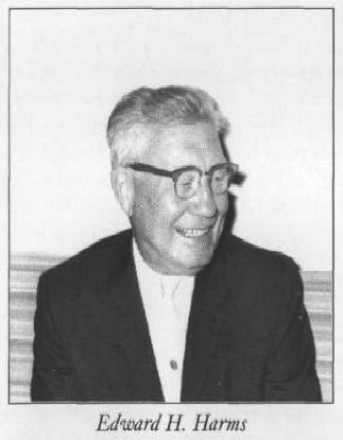
In 1926, Harms was elected Village Trustee, a position he held until 1932. He also served as Secretary of the Niles Center Businessmen’s Club and was elected to the District 69 School Board in 1927. Additionally, he was a director of the Niles Center National Bank until it closed during the Depression and never reopened. Ed and Irene had three children: Edward, Robert, and Patricia. Patricia still resides in Skokie.
In 1933, five men became members: Edward J. Tolzien, Albert B. Weber, Peter Frees, Otto Kante, and Ray W. Haben. Peter Frees and his brother Joseph, who joined the Section in 1935, were proprietors of the Frees Brothers Bakery and Delicatessen, located at 8013 Lincoln Avenue. Like most bakers, their days were long. They opened the store daily at 6:00 a.m. and closed at 7:00 p.m. To order Easter cake lambs or a dozen eggs—priced at nineteen cents per dozen—customers could call Niles Center 1013. In later years, circa 1965, Joseph Frees became proprietor of the Main Street Tavern, located on Main Street two blocks west of McCormick Boulevard, where sandwiches and homemade chili were served.
Ray W. Haben, married to Margaret K. Seul, was born in Wheeling, Illinois, in 1896. The son of Frank and Cecelia Yaeger Haben, he grew up on a farm and, as a youth, owned and trained what was considered a “perfect” team of horses. Because of this skill, Ray was often requested to transport the deceased from church to cemetery. This experience inspired him to study mortuary science. However, prior to beginning his studies, World War I required his service in France. Upon receiving an honorable discharge, Ray commenced studies at the Worsham Embalming School and graduated in 1922.
In 1923, James Bradley, an established undertaker in Chicago, opened a mortuary in Niles Center at 8038 Lincoln Avenue in partnership with the young Ray Haben. An advertisement in the 1925 Schobermesse Book promoted their ambulance service, proclaiming that “no distance was too far nor any hour too late.” Their telephone number was Niles Center 27-J.
From 1925 to 1929, the Bradley–Haben mortuary operated at 8106 Lincoln Avenue. In 1929, after dissolving the partnership, Ray opened the Haben Funeral Home at 8057 Niles Center Road. The business continues to operate under the ownership of Ray’s widow, Margaret, his son R. William, and his grandson John W. Haben, presently a member of the Section.
In 1925, Ray married Margaret K. Seul, daughter of John Seul, the baker, and cousin to Pat Seul. Together, they had four children.
Among his many civic activities, Ray was a charter member of Rotary, the Knights of Columbus, Post Commander of the Morton Grove American Legion, a member of the Skokie VFW, and Treasurer and Director of the Chamber of Commerce. During his tenure as Treasurer, he served as chairman of Niles Center Days, an annual carnival held in downtown Niles Center. He was also a shareholder and officer of the Niles Center Mercantile Company (later Skokie’s Ace Hardware) until the early 1950s.
In May 1967, Ray was hospitalized with circulatory problems and passed away on June 2, 1967. In his memory, flagpoles were erected in each of the Christian cemeteries in Skokie to honor those who had served in the Armed Forces.
The year 1935 proved to be a banner year for membership. It marked the first year of Scotty Krier’s term as President, during which sixty-six men joined the Section.
| Markens Schmitt | Joseph Frees | Leonard Lazar | Anthony Abbink |
| Edward Huscher | William K. Lyon | John W. Wuerth | Ted J. Heinz |
| Martin Mueller | Roy B. Moore | Bill Biegert, Sr. | F. Bruce Harris |
| Russell Tucker | Ambrose Brod | Mathias Baumann, Jr. | Stephen L. Weber |
| Ambrose M. Baumann | Joseph F. Urbanus | Richard J. Lockard | Harold “Holly” Klehm |
| Peter J. Hohs | Frank Chity | Joseph Zimmer | Joseph J. Schildgen |
| Michael E. Fuerst | John C. Buscher | John R. Weber | Harry Heinz |
| Edward A. Heinz | John J. Puetz | John E. Mooney | Herman Hinze |
| Robert Hoffman | Peter Nelson | Ben Hachenberg | Max Schedelbauer |
| Ralph Edinger | Irving Harer | Paul Allen, D.D.S. | Thomas J. O’Connell Sr. |
| Gustav Milz | Herman Giannini | Henry G. Vogt | Clarence J. Dahm |
| A. W. Morf | Anthony Schmitt | William P. Hohs | Robert W. De Pau |
| Joseph Weber | Edward B. Schyllar | Clarence Ridley | Elmer A. Aleckson |
| William Zwimpfer | George Papinean | Edward R. Kutz | Claude E. Lange |
| Peter A. Kalmes | William C. Flanigan | Robert R. Lutz | Thomas J. McMullen |
| Edmund V. Lykes | Armond King | Albert J. Cote | Roland R. Moore |
| Lawrence Weber |
William K. Lyon, married to Evelyn Chambers, was born in Chicago in 1900. In the mid-1920s, he moved to Niles Center and resided at 8029 Kilbourn Avenue. Bill contracted polio, an illness that would lead to an acquaintance with a prominent world figure, Franklin D. Roosevelt. The two met while undergoing polio therapy. In 1935, President Roosevelt personally appointed Bill as Postmaster of the Village of Niles Center, a position he held until 1945. Bill’s son, Don Lyon, later served as campaign manager for Joseph J. Witry, Sr. during his unsuccessful judicial campaign in 1960.
In 1939, Bill Lyon was elected Secretary-Treasurer of Illinois Chapter No. 6 of the National Association of Postmasters and also served as President of the Cook County Postmasters Association. His post office was located at 7914 Lincoln Avenue.
Also joining the Section was John W. Wuerth. An accountant by profession, he was born in Minneapolis, Minnesota, in 1895. He and his wife, Frances, moved to Niles Center, where John quickly became involved in local politics. He was elected Village Trustee in 1935 and served until 1944, at which time he succeeded George E. Blameuser as Village President. He served as the Village’s eighth President during the years 1935, 1940, and 1947.
In the 1938 Golden Jubilee Book published by the Brotherhood, a congratulatory advertisement from the Village of Niles Center appeared, listing the following Section 3 members: Ambrose Brod, Russell Tucker, Armond King, John W. Wuerth, Ted Heinz, and Dr. Sintzel. George E. Blameuser was then a member of Section 8. From 1939 to 1944, these men—along with Peter Conrad (Trustee) and Holly Klehm (Clerk)—held public office simultaneously, resulting in nine Section members serving in Village government at one time. The advertisement is reproduced here.
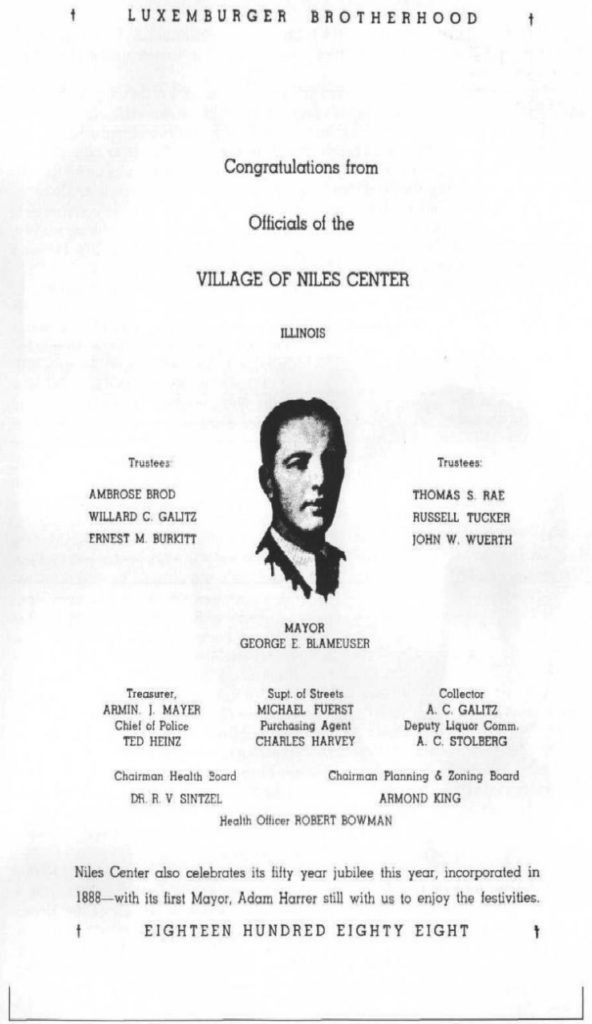
One may note that the author has referred to the chief executive of the Village as President. Under the form of government adopted by the village fathers in 1888, the elected officials were known as the President, Clerk, and Trustees. Oftentimes, however, the chief executive preferred to be known as “Mayor” and was commonly addressed as such.
While the President and Mayor are technically associated with differing forms of municipal government, the two offices perform the same functions. It was not until the early 1980s, by ordinance, that the chief executive of Skokie could correctly be called Mayor.
Roy B. Moore was born in Illinois and, for many years, was the proprietor of the Niles Center Jeweler. His store was located at 8025 Lincoln Avenue. The building itself was demolished in the spring of 1987, although Moore had vacated the premises in the 1960s. He was a member of the Chamber of Commerce and served as its Vice President in 1936.
William Biegert, Sr. (married to Christina Biegert), was born in Altheim, Germany, in 1898. In 1926, leaving his wife and two sons behind, he emigrated to America and settled in Morton Grove. He worked at the Luther Brickyard in Glenview until purchasing an ice business in Niles Center in 1930. That same year, Christina came to America, followed by their sons, Bill Jr. and Helmut, in 1931.
When refrigeration replaced ice-cooled chests in the 1930s, Biegert, Sr. established a beer and beverage distributorship, serving White Rock beverages and long pretzels from the dock behind his home at 8236 Niles Center Road. Every child—and many adults—received pretzels stored in a large can on the dock.
Soon after joining the Section, Bill, Sr. became a Trustee and, except for 1950 and 1951, when he also served as Vice President, he held the office of Trustee for most of his tenure. Bill Sr. passed away in 1964.
Ambrose Brod (married to Madeline Yehl) was born in Niles Center in 1903. His mother was Mary Blameuser, daughter of Peter Blameuser, Jr., and sister of Peter Blameuser III. Ambrose attended St. Peter’s Grammar School and graduated from Lane Technical High School circa 1920. By 1925, he had established his business in Niles Center, then known as the Niles Center Electric Shop. The business continues to operate at its original location, 802 Lincoln Avenue, across from the old Siegel Barber Shop—now the Skokie office of a prominent Loop law firm.
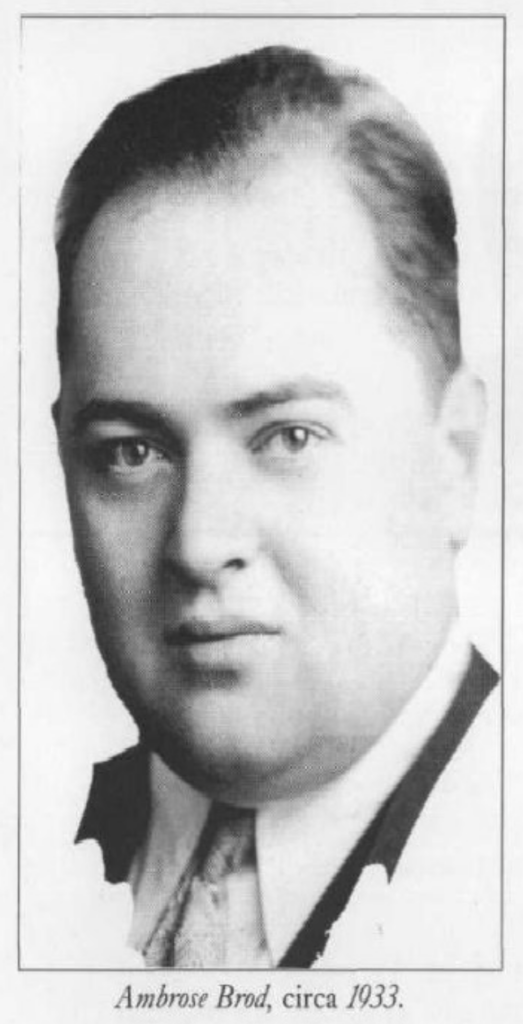
Ambrose was a joiner in every sense of the word. In addition to his Section 15 activities, he served as a police commissioner, volunteer fireman, and was a member of the Moose, Chamber of Commerce, Fraternal Order of Eagles, Elks, Knights of Columbus, Niles Center Sports Club, and Foresters. From 1932 to 1944, he served as a Village Trustee.
At the first Village Board meeting held following Pearl Harbor, Ambrose Brod was appointed Skokie’s first blackout warden by Village President George E. Blameuser, his first cousin.
In February 1936, Illinois Governor Henry Horner began his campaign for renomination. A Horner-for-Governor Club was organized in Niles Center, with Ambrose Brod serving as its first chairman. In accepting the post, Brod stated:
“There has been a big swing of public sentiment toward the Governor for his courageous stand against boss rule. Even locally, I find many who formerly repeated criticisms of him are now commenting favorably on his administration. This swing of sentiment, I believe, indicates he will be renominated and re-elected.”
Governor Horner was successful in his bid for re-election.
In 1920, Brod began collecting antique firearms. The oldest was a British flintlock dating to 1700. His collection also included French military pistols and long rifles from Kentucky and Tennessee. Although Ambrose died in 1958, his gun collection can still be viewed at the Brod Electric Store in downtown Skokie.
As is well known, fire apparatus are customarily painted red, although lime green or yellow engines may be seen in some communities. Red, however, was not always the color of choice. In November 1937, the Volunteer Fire Department purchased a white fire truck with blue and gold trim. According to Neil King, son of Armond King, the white fire truck was the object of desire for nearly every child in Niles Center. Often, children were invited to ride on the truck. Ambrose Brod, in his capacity as Assistant Fire Chief, served on the committee that selected the white fire truck. Every child who rode on it owes thanks to Ambrose and his fellow committee members.
F. Bruce Harris was born in Port Arthur, Texas, in 1899. He worked in the utility business and lived at 4815 Elm Street in Niles Center. In January 1934, he was elected Vice President of the Niles Center Chamber of Commerce, a position he held until January 1936, when he was elected President, succeeding Holly Klehm. Harris was also a past commander of the American Legion post in Niles Center, having served in World War I.
In addition to Holly Klehm, who remained a Chamber director, other Section 15 members who served as officers during this period included Roy Moore, the jeweler, as Vice President; Ray Haben, the undertaker, as Treasurer; Joe Meir, the printer, as Secretary; and Scotty Krier as Director.
As so often occurs in small towns where everyone is a neighbor, ironies abound. At the southeast corner of Lincoln and Oakton Streets in downtown Skokie, there now stands a park dedicated to the memory of Scotty Krier. Before the park’s dedication, however, the site was occupied by a Sinclair Service Station owned and operated by Joseph F. Urbanus.
Joseph Urbanus (married to Mabel Larson) was born in Chicago in 1896. He operated the service station at the southeast corner of Lincoln and Oakton for more than forty-three years. Active in village affairs, he served as President of the Chamber of Commerce and sponsored numerous athletic teams. One such team, the Urbanus Greasers, won the bowling championship of the Oakton Park Athletic Club in 1939.
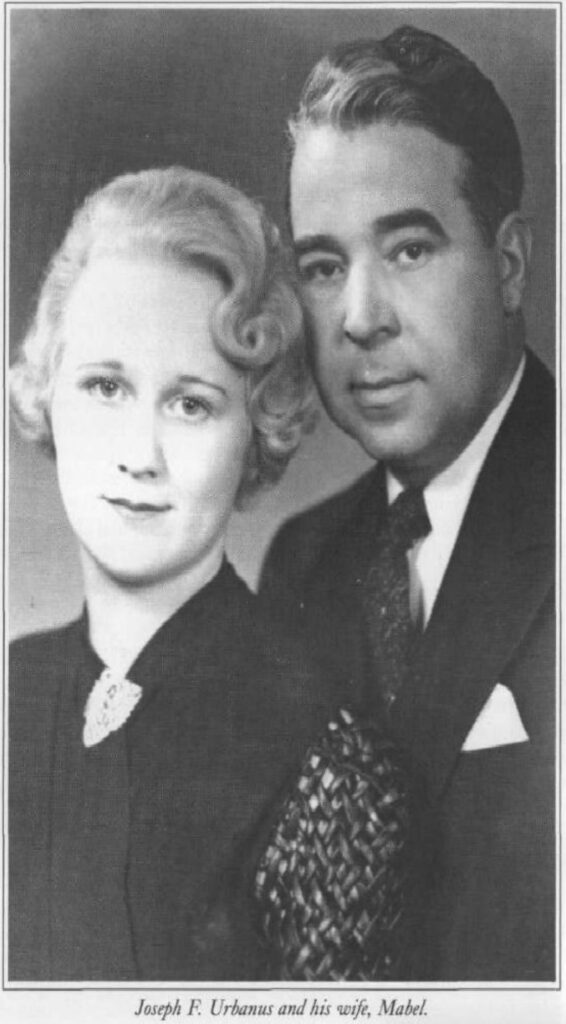
In 1940, as Chairman of the Chamber of Commerce Public Relations Committee, Urbanus was instrumental in changing the local telephone exchange from Niles Center to Skokie. In conjunction with Postmaster Bill Lyon, he also helped secure Skokie Post Office service for the area south of Church Street and east of Crawford Avenue.
That same year, he was selected by a group of thirty citizens—known as the Caucus Committee—to challenge George E. Blameuser for Village President. His running mate for Clerk was John C. Busscher, also a member of Section 15.
John C. Busscher, nephew of George Busscher, Jr., was born in 1914 in Niles Center. Educated at St. George High School and Xavier University, John was a part-owner of the Center Grocery and Market, located at 8005 Lincoln Avenue. The First National Bank of Skokie now occupies the site.
In a spirited campaign—during which the local newspaper editor compared Mayor Blameuser to such villainous contemporaries as Hitler and Mussolini—Blameuser defeated Joe Urbanus by 505 votes out of 3,747 cast. Holly Klehm defeated John C. Busscher for Clerk by 301 votes. It was likely the only time in the Village’s history that all four candidates for the two highest Village offices were members of the same organization.
In 1935, the Heinz brothers—Edward, Harry, and Ted—joined Section 15. Edward A. Heinz (married to Marion Hand) was proprietor of the Heinz Radio and Electrical Appliance Shop at 8149 Lincoln Avenue until 1965. He and his wife had four children, two of whom are still living. Edward is widowed and resides in Niles.
In 1936, a “Leonard” refrigerator could be purchased for as little as fifteen cents per day. Among its notable features were a temperature indicator and a foot-pedal door opener.
Ted J. Heinz, a lifelong bachelor, was born in Niles Center in 1901. When he joined the Section on August 8, 1935, he listed his occupation as insurance agent. In 1933, he served a one-year term as Village Trustee.
In 1934, the office of Chief of Police became vacant. For the next two years, until 1936, the position remained unfilled, at which time Ted Heinz was selected by the Village Police Committee, chaired by Ambrose Brod. Although Ted had no prior police experience, “the former councilman is said to possess executive ability of high caliber.” In addition to his police duties, Ted was a charter member of the Niles Center Sports Club. He passed away in 1950.
John J. Puetz (married to Frances Kares) was born in Chicago to Henry and Nellie Puetz. Henry had immigrated to the United States from Luxembourg in the early 1890s.
A native of Chicago’s South Side, John was educated at St. Joseph’s High School, from which he graduated circa 1922. In his senior year, he was selected as an All-State basketball player. Following graduation, he worked at the Chicago Title and Trust Company, where he developed expertise in handling special assessments. From there, he joined the law firm of Maloney, Whiteside & Wooster, whose practice included special assessment work for many northern suburbs.
In 1930, he married Frances Kares, with whom he had three children. The eldest, John H. Puetz, still resides in Skokie. In the mid-1930s, John J. moved his family to Niles Center, where he accepted a position with the Village as Deputy Collector. He held that position until 1944, when he began working for Armond King. Both John J. Puetz and Armond King became members of Section 15 in 1935.
In 1950, John J. Puetz left King’s employ to open his own office at 493 Oakton Street, across from the present site of the Katz-Weiss office building. From this location, he worked diligently in the development of Skokie’s residential, commercial, and industrial properties. In recognition of his leadership abilities, he was selected as the first President of the North Suburban Real Estate Board and retired in 1966. Puetz was also a Grand Knight of the Skokie Council of the Knights of Columbus, a member of Rotary, and a parishioner of St. Peter’s Catholic Church. He passed away in 1982.
Armond King (married to Hester Scheinman) was a native of Pennsylvania, where he was associated in the real estate and insurance business with his father. In the early 1920s, he moved to Chicago and joined the real estate firm of Krenn & Dato, where he was responsible for commercial and residential leasing.
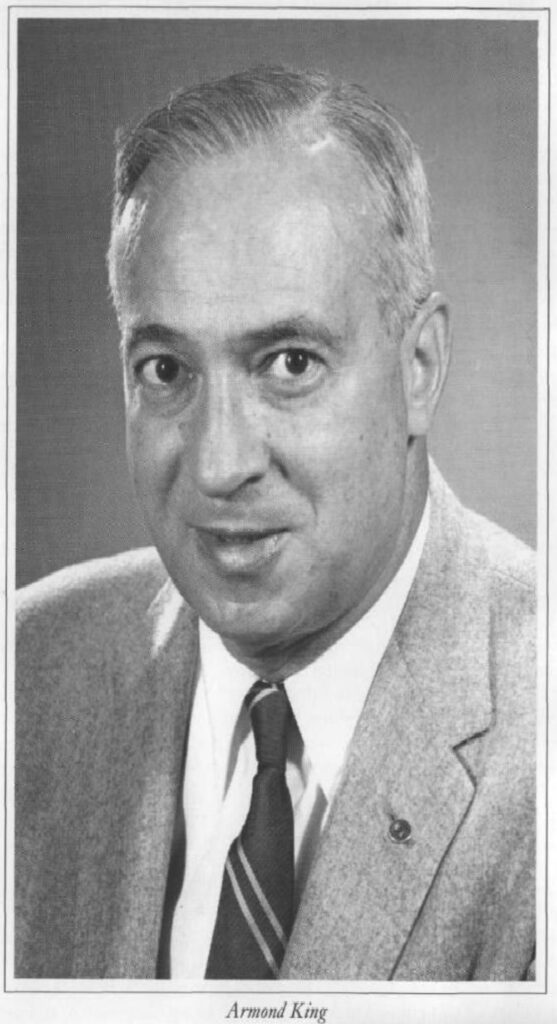
Krenn & Dato were highly active in subdividing Niles Center real estate. Although the firm is now defunct, its name remains evident in the legal descriptions of many village properties.
In the early 1920s, the firm constructed Devonshire Manor, a large cooperative apartment complex that still stands east of Niles Center Road, north of Dempster Street, on Grove Street. By 1926, the project was failing, and Krenn & Dato assigned Armond King to manage it. Armond, his wife Hester, and their son Neil moved to Niles Center.
Shortly thereafter, Krenn & Dato failed, leaving Armond King on his own. He began building homes, selling them, and providing insurance services. His business proved successful, and over the next twenty-three years, he relocated his office three times, ultimately settling in 1949 at 5120 Oakton Street.
King’s activities extended well beyond Section 15. He was a charter member of the Skokie Rotary Club, President of the Skokie Valley United Crusade, Vice President and Director of the Chamber of Commerce, Director of the First National Bank of Skokie, Chairman of both the Village Zoning Board of Appeals and Planning Commission, and a member of the Township High School District 219 Board.
His most enduring contributions to Niles Center were made as Chairman of the Zoning Commission. As originally subdivided, village lots were zoned to accommodate apartment buildings as narrow as thirty feet wide. During the late 1930s and 1940s, at Armond King’s urging, several thousand lots were rezoned to allow for single-family homes.
In recognition of his many contributions to the development of his adopted village, Armond King was named a recipient of the Village’s Diamond Jubilee Award in 1963. He passed away in 1972.
At this juncture, it is appropriate to address the Village’s renaming from Niles Center to Skokie, as three Section members—Scotty Krier, Armond King, and George E. Blameuser—were instrumental in effecting the change.
The information that follows was drawn from several sources: Early Skokie, published by the League of Women Voters in 1976; the Diamond Jubilee editions of The News; The Life, published July 3, 1963, and January 17, 1963; and issues of The News dated November 9, 1939; November 16, 1939; December 7, 1939; December 28, 1939; and February 3, 1955.
As early as 1936, agitation arose to change the Village’s name from Niles Center to nearly anything else. The stated reasons were threefold:
1.) Confusion among the Village of Niles, the Township of Niles, and Niles Center.
2.) The Village’s reputation as a haven for speakeasies and taverns.
3.) The rural-sounding name “Niles Center” was deemed inappropriate for the times.
Initially, agitation was largely confined to editorial demands for change. In 1939, however, a movement led by Scotty Krier gained traction and ultimately achieved its objective.
Early Skokie describes the events surrounding the name change, and its account mirrors those appearing in the Diamond Jubilee editions of both newspapers. All three sources state that after a 1939 contest soliciting new names, the Village Trustees voted against adopting “Ridgeview,” the contest winner. Following a June 1940 referendum in which residents voted to change the name to any alternative, Mayor Blameuser referred the matter to a committee of distinguished citizens charged with selecting a new name.
Both the Early Skokie and the Diamond Jubilee editions state unequivocally that although 1,168 entries were submitted in the 1939 contest, none proposed the name “Skokie.” According to these sources, the name first appeared in 1940 when Armond King reportedly noticed an Indian figurehead on bank stationery and suggested “Skokie” as an appropriate name. This version of events, however, is incorrect.
In November 1939, Scotty Krier—described as a “prominent businessman and a director of the Chamber of Commerce” (Niles Center News, November 9, 1939)—formed a committee to effect a name change by Christmas of that year. The committee solicited name suggestions from residents, including schoolchildren.
Approximately 4,500 suggestions were received. After eliminating duplicates, 1,097 distinct names remained. On December 4, 1939, a panel of judges—sixteen men and one woman—narrowed the list to twenty-five names for further consideration. Armond King was not among the judges. In addition to Ridgeview and Oakton, which were later placed in opposition in an unofficial election, the December 7, 1939, issue of The News lists “Skokie” among the nominated names. Any account asserting that “Skokie” was not proposed before 1940 is therefore erroneous.
Based on discussions with Armond King’s son, Neil, and research conducted by the author, the likely sequence of events is as follows. Armond King served on the Village Planning and Zoning Commissions. George E. Blameuser was Village President, and Scotty Krier was deeply involved in civic affairs. After the Trustees rejected Ridgeview, the matter was referred to a committee composed of representatives from various civic organizations. Appointees included Section 3 member Joe Hansen, representing the Chamber of Commerce; Section 15 member Bill Lyon, representing the American Legion; and Armond King, representing the Planning Commission. Mayor Blameuser and the Trustees served as ex officio voting members of the Name Change Committee.
When the committee convened in August 1940, the name “Skokie” was already well known. It is an Indigenous term meaning “swampland,” used by the Potawatomi to describe the area. It had been proposed in the 1939 contest and was already associated with the region as “Skokie Valley.”
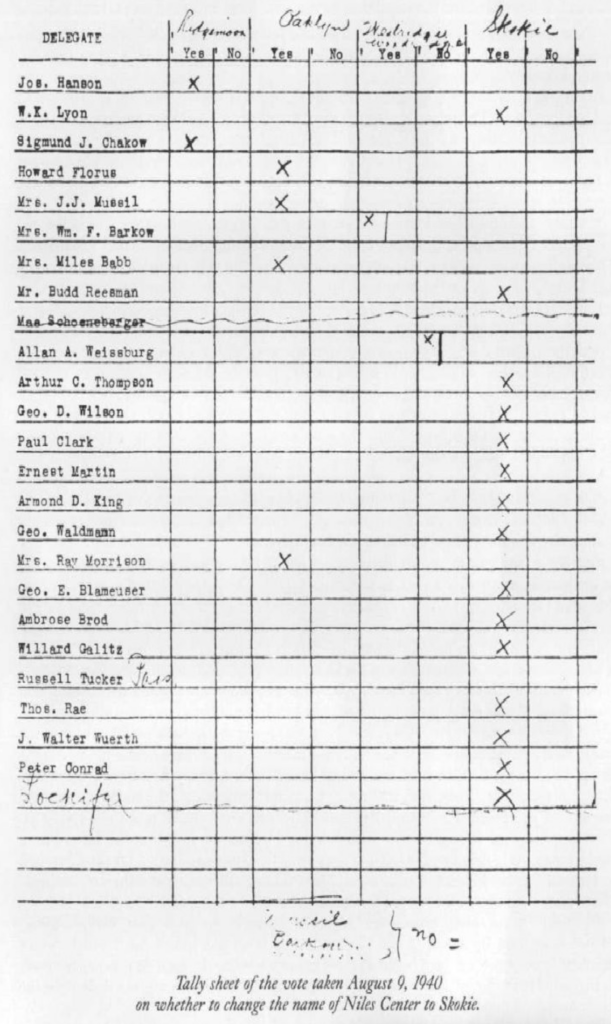
Assuming the bank stationery anecdote is accurate, it is likely that Armond King played a key role in persuading committee members to support the name. A review of the committee vote taken on August 9, 1940, shows “Skokie” receiving fifteen votes to Oakton’s four.
All Village officials present voted for “Skokie,” with the exception of Trustee Russell Tucker, who was absent. This unanimity suggests that considerable deliberation had occurred before the meeting and that by August 9, the decision had effectively been made. On August 21, 1940, the Village requested that the Illinois Secretary of State reserve the name “Skokie” for sixty days. On September 5, 1940, petitions urging the adoption of the name were filed with Clerk Holly Klehm. Finally, on October 1, 1940, the Village Board passed an ordinance adopting the name “Skokie” by a 6–0 vote. The ordinance became effective on November 15, 1940.
If Scotty Krier initiated the crusade to change the Village’s name, Armond King nurtured it, and George E. Blameuser implemented it. There is certainly sufficient credit to go around, and Section 15 was well represented in the effort.
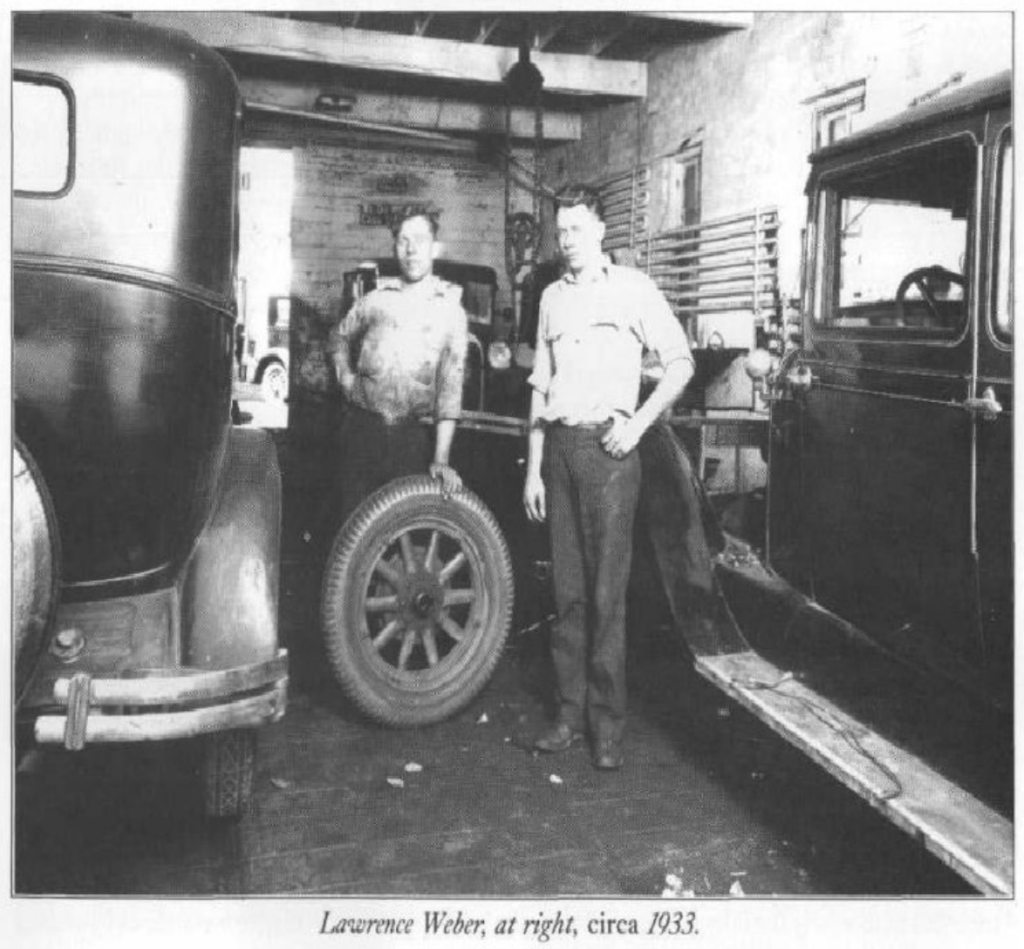
The Weber brothers, Joe (married to Caroline Smith) and Lawrence (married to Helen Kufeldt), were born in Niles Center and became Section members in 1935. In 1932, Lawrence established an auto repair business. At that time, Joe was engaged in the welding trade. In 1933, the brothers merged their operations and opened their first shop at 5030 Oakton Street. Their services included the repair of boilers, tubes, smokestacks, and smokeboxes, as well as the installation of fireboxes.
By 1941, the Weber brothers had relocated to 8102 Lincoln Avenue, and by 1945, they returned to 5030 Oakton Street, where the business remained until its relocation to Palatine in 1962. The tower section of the First National Bank building now occupies the former site of the Weber Brothers Garage. Joe Weber passed away in 1984. Lawrence and his wife, Helen, reside in Palatine.
Paul E. Allen, D.D.S., was a pinochle-playing crony of Scotty Krier’s. Born in Chicago in 1897, he was educated at the Northwestern University College of Dentistry and began his dental practice in Niles Center circa 1923. His office was located on the second floor of the building that presently houses the Desiree Restaurant.
In addition to his professional duties—which included inventing and obtaining a patent for a teething ring—Paul Allen’s avocation was politics. A former President of the District 69 School Board, he resigned that position to run against George E. Blameuser for the office of Village President in 1937, a race he lost. In 1939, he challenged Ivan M. Paroubek for a seat on the high school board, which he also lost. Thereafter, Paul Allen contented himself with associating with politicians rather than seeking office himself.
Thomas J. O’Connell, Sr. (married to Catherine Butler), was born on November 12, 1894. He was a salesman and executive with the Elgin Watch Company. In 1929, Tom, Sr., Catherine, and their two sons, Thomas, Jr., and John R., moved to Niles Center.
Armando J. “Herman” Giannini (married to Marguerite Lockefer) was born in Chicago on December 24, 1896. He and his brothers operated a wholesale produce business on South Water Market Street. During World War I, Herman served in the United States Navy. He returned safely and moved with his family to Niles Center in 1930.
Among Herman’s many activities was his involvement with the Lincoln Turn-Verein Club of Chicago. In 1936, in a surprisingly close and spirited contest, he was elected Commander of American Legion Post No. 320, located in Niles Center. In that election, Herman was nominated from the floor against the wishes of the nominating committee, which had supported Elmer A. Aleckson, also a member of Section 15.
Herman and Marguerite had two daughters. One, Lorna, married John R. O’Connell, son of Thomas J. O’Connell, Sr. Their other daughter, Ruth, married Dennis E. Riveli, a prominent Skokie clothing retailer who, with his brother Joe, established Dennis Clothes in downtown Skokie in 1953. In 1956, Herman Giannini, John R. O’Connell, and Dennis Riveli jointly founded Skokie Federal Savings and Loan Association, which grew into a multi-million-dollar financial institution.
At the beginning of the 1930s, the officers of Section 15 were paid the princely aggregate sum of $88.00. The President received $3.00, the Vice President $2.00, the Recording Secretary $40.00, the Financial Secretary $40.00, and each Trustee $1.00. By 1937, the salary of the Recording Secretary (Paul Hermes) had been reduced to $25.00 per year.
Section meetings during the 1930s were primarily held at Hicks Krier’s tavern. Until 1937, when the schedule was changed to the third Thursday of each month, meetings were held on the second Thursday.
The minutes of these meetings indicate that, in addition to Section 15 members, officers of the Grand Lodge and representatives of other sections were frequently present. Both Grand President Fred Gilson and Grand Secretary Nic Nilles were customarily invited to speak when in attendance. Grand officers also presided over the annual installation of officers each January.
One of the benefits of membership in the L.B.A. was the receipt of sick benefits by ill members, calculated at a rate of $5.00 per week. In 1935, John Kalmes received six weeks of sick benefits, totaling $30.00, while Doc Sintzel received twelve weeks. These payments were intended to supplement lost income. A corresponding duty of membership was service on the Sick Committee, appointed by the President as needed and reconstituted regularly. When Steve Zibilski fell ill in December 1935, Tony Seul, Fred Jaehuka, and Ben Schaul were appointed by President Scotty Krier to visit him.
Prior to the advent of the Hasenpfeffer in 1940, one of the principal social affairs sponsored by the Section was an annual dance. On December 7, 1935, the dance was held at Croll’s Hall and generated a tidy profit of $132.95 for the Section. Members appointed to the dance committee included Peter Dechambre, Henry Weber, Herman Giannini, Sid Mayer, and Ralph Edinger. The dance was held annually, typically in December or January.
In 1939, the dance took place on January 21 at Mueller’s Hall, located at 6211 Lincoln Avenue in Morton Grove. Admission was thirty-five cents at the door, and music was provided by Frank Klein’s Golden Jubilee Orchestra. An examination of the expense book shows the following:
| Frank Klein Music | $ 35.00 |
| Mrs. Miler – Expenses | $ 20.75 |
| Scheutz Bros. Liquor | $ 5.85 |
| Bill Biegert – Expense | $ 8.80 |
| Pat Seul – Dance Permit | $ 10.00 |
| Scotty Krier – expense | $ 3.85 |
| The News – Ad | $ 3.20 |
| Joe Meir – Program &Tickets | $ 41.75 |
| Door Prizes TOTAL: | $ 8.00 $ 137.20 |
At the installation of officers for 1936, the Luxembourg Liederbund was invited to entertain the Section members. They performed in grand style, singing numerous German and English selections that were warmly received and greatly applauded.
In addition to hosting dances, the Section also participated in the affairs of other Sections. Section 8 sponsored both a Halloween party and a St. Patrick’s Day dance. In 1937, Section 15 received invitations to participate in Section 15’s Golden Jubilee and Section 4’s Thanksgiving Festival. Monetary contributions to the events of other L.B.A. Sections have continued to the present day.
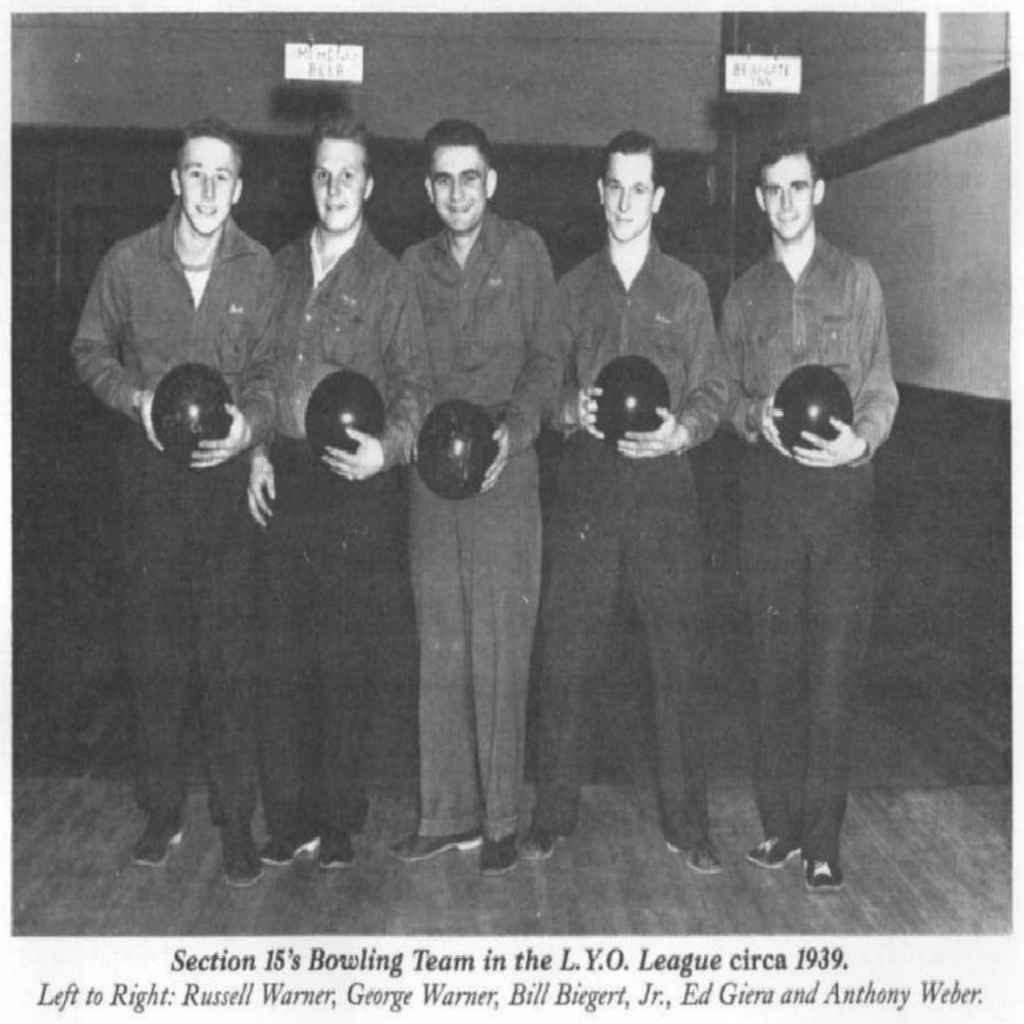
Also in 1937, Section 15 sent five delegates to the convention convened for the purpose of organizing the Luxembourg Youth Organization. These delegates were Andrew Greiner, Jake Kalmes, Pat Seul, Nick Kalmes, and Rudolph Seul. The purpose of the L.Y.O. was to promote sporting events, social gatherings, and other activities of interest to younger members of the L.B.A. Jake Kalmes served as the organization’s first Assistant Marshal. In 1938, the Section purchased four baseball bats for use by the L.Y.O. and also purchased advertising space in L.Y.O. program books.
The Constitution of the L.B.A. requires that a convention of the Grand Lodge be held every two years. In 1937, for the first time, the convention was to be held in Niles Center.
At the Section meeting on March 18, 1937, Scotty Krier, Fred Jaehuka, Joe Meir, Tony Seul, Joe Frees, and John Kalmes were appointed to a committee to arrange for hosting the convention.
On May 2, 1937, the convention was held in the Kellen Auditorium at St. Peter’s Catholic School. As part of the festivities, a large parade proceeded down Niles Center Road. Section 15’s convention delegates were Tony Seul, Tony Krier, Nick Kalmes, and Paul Hermes.
In May 1938, William Biegert, Jr. (married to Lorraine Baumhardt) joined Section 15 and currently serves as its Treasurer.
In 1928, Bill’s father, William Biegert, Sr., left their home in Altheim, Germany, to establish a new life in America. Bill, Jr., and his brother Helmut—who would later also join Section 15—remained in Germany, first with their mother, Christina, until her departure in 1930, and thereafter with their grandparents until they were reunited with their father in 1931.
In 1942, Bill Jr. was drafted into military service and sent to Texas for training as an aircraft mechanic. In 1944, he was deployed to Germany, where he served as an interpreter. He was discharged from service in 1946.
Upon returning from active duty, Bill, Jr. worked alongside his father and brother, Helmut, in the family-owned beer and beverage distribution business until it closed in 1969. That year, Helmut relocated to Butternut, Wisconsin, while Bill, Jr. accepted employment with the James Paulus Distribution Company, where he worked until retiring in 1972.
In 1948, Bill, Jr. and his wife Lorraine—known as “Dolly”—welcomed their only child, Glenn, who was born with cerebral palsy. They devoted their lives to his care until his passing in 1981. Bill and Dolly Biegert reside in Morton Grove.
In late 1939, the Grand Lodge requested that each Section remit an assessment of twenty cents per member to help defray expenses associated with the upcoming visit of Prince Felix and Crown Prince Jean to Chicago. Initially, a dissenting member moved that Section 15 decline payment, citing financial constraints. The motion was evidently defeated, as the Grand Lodge ultimately received a check for $14.60, indicating an active membership of seventy-three members.
The period beginning January 1, 1940, saw the admission of several members who would later play important roles in Chicago’s Luxembourg community. Before welcoming these new members, however, the Section was obliged to bid farewell to others. Anton Krier, Sr., George Busscher, Jr., Peter Nelson, Nick Weber, Fred Schoening, Peter Hohs, and Peter Dechambre all passed away during this period.
Their deaths were formally acknowledged through resolutions of condolence entered into the minutes of the Section meetings. The officers for 1940 were:
| President | Pat Seul |
| Vice-President | Henry Weber |
| Recording Secretary | Paul Hermes |
| Financial Secretary | Nick Kalmes |
| Treasurer | Joe Freres |
| Trustee | Bill Biegert, Sr. |
| Trustee | Tony Seul |
| Trustee | Val Krier |
In April 1940, Otto Deckert became a member of the Section. Although he listed his occupation as a gunsmith, he owned and operated a tavern in Morton Grove known as the Sportsmen’s Tavern, located on Waukegan Road, south of Dempster Street. In November 1939, he purchased Mueller’s Hall, refurbished it in a Bavarian bierstube style, and hosted a Wiener Schnitzel festival. At the rear of the restaurant was a large dance hall—in which Section 15 had hosted its dance in 1939—where square dancing, polkas, rye waltzes, German waltzes, and two-step dancing were held every Friday evening. Music was provided by Homer’s Melody Makers. It was from Otto Deckert’s estate that the L.B.A. would purchase the building and grounds that became known as the Luxembourg Gardens in 1954.
In 1942, John A. Koller, Sr., of Morton Grove became a member of the Section. He was the proprietor of Jack’s Garage at 8614 Ferris Avenue, Morton Grove. Later, he became the proprietor of Jack’s Hardware at 6244 Lincoln Avenue, and his son Jack—also a member of Section 15—operated a hobby shop further down the block. By 1957, John A. Koller, Sr. was the Mayor of Morton Grove.
The Hansen family played a prominent role in the affairs of Section 15. Its patriarch was Hubert G. Hansen (married to Marie A. Mercatoris), who was born in Neider Feulen, Luxembourg, and immigrated to the United States in 1912. Upon arriving in Chicago, Hubert became a member of Section 3. In the 1930s, he relocated to Niles Center and founded the Oakton Park Realty Company, which engaged in homebuilding as well as real estate management and sales. His office was located at 4646 Oakton Street. By 1941, Hubert had expanded his business to include insurance and loans and even found time to run in the 1941 village election as an independent candidate for the office of Trustee. He lost that election to candidates supported by Mayor George E. Blameuser.
Hubert served as a building commissioner in Skokie, a director of the Luxembourg Gardens, and a member of the Luxembourg-American Social Club. In 1964, he and Marie celebrated their Golden Wedding Jubilee at the Luxembourg Gardens. In 1957, Hubert transferred to Section 15, joining his sons—two of whom, Hubert John and Aloysius, had joined Section 15 in 1944. The third son, Louis, joined in 1947. All three sons worked in their father’s business: John as a construction supervisor, Al as a carpenter, and Louis as a cement mason. In 1952, Louis relocated to San Diego, California, where he established his own business.
Hubert John Hansen (married to MaryAnn Schneider) was born on October 6, 1914. In 1933, he moved to Niles Center with his parents and worked alongside his father in the construction business. He joined the Gross Point Band in 1934 and played the tuba. In 1940, he married MaryAnn Schneider and lived with his family at 8024 Kolmar Avenue. His eldest son, Donald J., joined Section 15 in 1966, later succeeded his father as Section President, and was elected Grand Secretary of the L.B.A. in 1980—only the second Section 15 member elected to a Grand Lodge office. John served as Section President from 1964 to 1975, and after the Luxembourg Gardens closed in 1968, Section meetings were held at his home. One of the small pleasures of attending meetings with John and George E. Blameuser was listening to their fishing stories. The two men would charter a plane to Great Bear Lake, just south of the Arctic Circle, where they camped for a week before the plane returned to retrieve them. At the time, both men were in their late sixties and early seventies.
In October 1941, Joseph J. Witry, Sr. (married to Catherine Burke), moved his family to Skokie and, in 1946, joined Section 15. He was born in 1905 on Chicago’s South Side, the fifth son of John and Anna Melsen Witry, both of whom had emigrated from Schieren, Luxembourg, in the early 1890s. He attended De La Salle High School, served as President of his senior class, and, while playing football at De La Sall,e became acquainted with Richard J. Daley. Though not a close associate of the Mayor, the two remained on a first-name basis throughout their adult lives. The author was introduced by his father to Mayor Daley at a Notre Dame football game in 1961. In 1967, Mayor Daley sent a telegram of condolences to the Witry family upon Joe’s death.
In 1928, Joe met Catherine Burke. She had been raised by her widowed father at 1057 Loyola Avenue in Rogers Park. While attending Loyola University, Joe met her at a party hosted by mutual friends, and in 1929—at the start of the professional baseball season—they were married in Springfield, Massachusetts, at St. Michael’s Cathedral. They raised four children, two of whom—Joseph, Jr. and Richard J.—became members of Section 15 in 1964 and 1973, respectively.
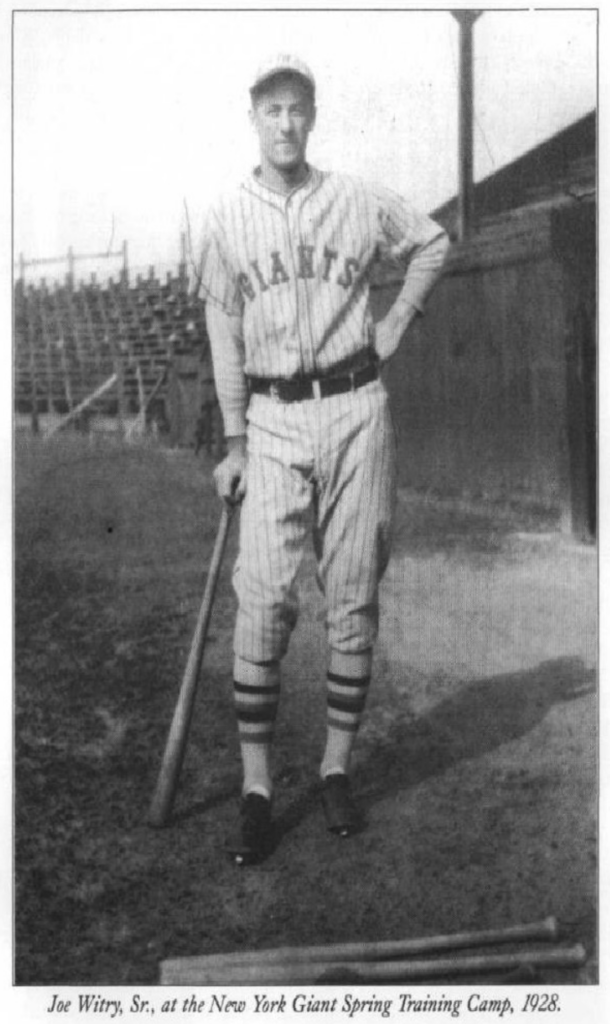
While attending Loyola University, Joe lettered in basketball, football, and baseball. He played basketball under Coach Lenny Sachs and, in 1927 and 1928, became the first two-time captain of the Rambler basketball five. In football, he played guard for Coach Roger Kiley, Sr., a former Notre Dame player under Knute Rockne who later became a distinguished jurist and a member of the United States Court of Appeals for the Seventh Circuit. Joe also excelled in baseball at Loyola, earning a professional contract with the New York Giants, then managed by the legendary Hall of Famer John McGraw.
In 1940 and 1949, Joe attended Giants spring training camps alongside such baseball luminaries as Carl Hubbell and Ray Schalk, though he was not selected to join the parent club. During those years, he played professionally for Giants farm teams in Providence, Rhode Island; Springfield, Massachusetts; and Bridgeport, Connecticut. At the conclusion of the 1929 season, Joe requested and received his unconditional release to return to Loyola and complete his law studies, which he did in 1930. In recognition of his athletic achievements, Joe Witry, Sr., was posthumously selected in 1970 as a charter member of Loyola University’s Athletic Hall of Fame.
After being admitted to the bar in 1931, Joe began his legal career with Castle, Williams, Long & McCarthy—an association that led to his relocation to Skokie in 1941.
The Niles Center State Bank was founded in 1907. One of its founders was Arista B. Williams, an attorney. As a major shareholder, it was not surprising that his law firm would represent the fledgling financial institution. From 1907 to the present, the firm founded by Williams has represented the bank, with one of its partners continuously serving on the Board of Directors. In 1941, Joe Witry moved to Skokie for two reasons: (1) to build a law practice among the area’s large Luxembourg-American population and (2) to serve on the Board of Directors of the Niles Center State Bank, a position he attained in 1943—the same year he became a partner in the firm of McCarthy, Witry, Lyon & McCarthy.
In 1947, Joe Witry was elected to succeed Pat Seul as President of Section 15, a position he held for three years. In 1949, he was elected to the first of two terms on the District 219 high school board and was re-elected in 1951. From 1950 to 1957, Joe also served as Grand Vice-President of the L.B.A., becoming the first Section 15 member to hold an officer’s position in the Grand Lodge.
In 1960, Joe made one final attempt at elective office. That year, Skokie established a village court system and elected two judges and a clerk. In a close race, Joe lost to Irving Goldstein and Harold Sullivan, the latter of whom later became Presiding Judge of the Second Municipal District, Circuit Court of Cook County. In retrospect, the loss proved fortuitous, as Joe was about to embark on a diplomatic career that would not have been available to him had he won the judicial post.
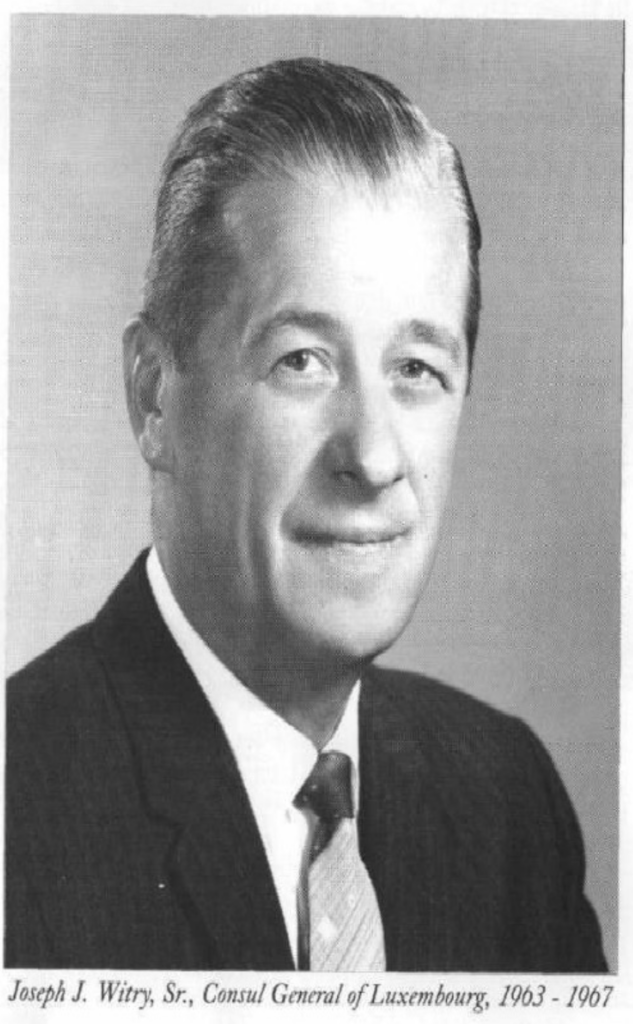
As far as can be determined, those selected by the Luxembourg government to represent it in Chicago and the surrounding states have always been members of the L.B.A. In 1921, Peter Krantz, Grand Treasurer, was appointed by H.R.H. Charlotte as the region’s first Consul of Luxembourg, a position he held until 1937. He was succeeded by the Honorable John Marsch, a member of Section 3, who served as Consul General until 1955. Marsch, in turn, was succeeded by another Section 3 member, John M. Trevelier, who held the office until 1963.
In 1962, Trevelier, an attorney, nominated Joe Witry, Sr. for the post of Consul. This nomination was approved by H.R.H. Charlotte, and the appointment was acknowledged by the U.S. Department of State. Upon Trevelier’s death in 1963, Witry was chosen to succeed him as Consul General of Luxembourg.
Until circa 1970, it was customary for the President of the United States to acknowledge a consular appointment through the promulgation of an exequatur bearing the President’s signature. The Witry family is fortunate to possess two such exequaturs, each bearing the signature of President John F. Kennedy. The second, recognizing Witry’s appointment as Consul General, was received by him on November 22, 1963. It had been executed on October 7, 1963.
In 1963, in celebration of Luxembourg’s first millennium, President Kennedy extended an invitation to H.R.H. Charlotte for a state visit to the United States. Chicago was included on her itinerary. On Thursday, May 2, 1963, a reception in honor of the Grand Duchess was held at the Luxembourg Gardens.
Held under the auspices of the Luxembourg-American Social Club and the L.B.A., Consul of Luxembourg Joseph J. Witry, Sr. served as Master of Ceremonies. He escorted the Grand Duchess to the podium and introduced the distinguished guests to the assembled crowd. On June 5, 1967, he passed away.
In 1947, Nick May, Sr. (married to Helen Schaul) transferred to Section 15 from Section 8. He was born in Evanston in 1899, and his paternal grandparents had emigrated from Wiltz in the 1880s. He and his wife had two children, Nick, Jr., and Frank. He worked as a welder at Bell & Gossett before later joining the Chicago Transit Authority. In 1958, he was elected President of Section 15 and held that position until 1961. Nick May, Sr., died in 1971.
The affairs of the Section in the 1940s were not markedly different from those of the 1930s, with the significant exception of World War II, during which many younger members were called to active duty in defense of their country.
In 1940, Section 15 hosted three affairs. The first was its annual dinner dance, held on May 1, 1940, at Deckert’s Hall. The second was a “Basket Picnic” at Landl’s Grove on July 28, 1940, chaired by Bill Biegert, Sr. The third was the first Hasenpfeffer, held on November 23, 1940, at Hackers’ Hall. In between these events, the Luxembourg Youth Organization hosted a dance on April 27, 1940; Section 8 held its Kirmes picnic; and Section 8 also hosted its winter carnival. At the Section picnic held in July, the winning baseball teams each received five free beers per man.
At meetings of the Supreme Assembly of the Brotherhood, known as the Convention, the use of a password is required to gain admittance. Examination of the Constitution shows that Section meetings need not begin with the recitation of a password. Nevertheless, in 1940, Section 15 adopted “Defend America” as the password for its meetings.
Although war had not yet begun for the United States, it had already been raging in Europe, and its effects were felt in America. In February 1941, the exiled Grand Duchess Charlotte visited Chicago, and Section 15 donated $15.00 to the Grand Lodge to help defray expenses associated with the royal visit. In September 1941, a party was held at Koenig’s Hall in Morton Grove to raise funds for Luxembourg relief, with Pat Seul placed in charge of Section 15’s efforts.
In February 1941, the Section exempted members in military service from paying dues during their period of service, although they were not entitled to receive sick benefits during that time. In March 1941, Jake Kalmes was drafted, followed by Pat and Rudolph Seul, Otto Deckert, Bill Biegert, Jr., William M. Dechambre, Russell Warner, Martin A. Krier, Jr., Henry Kalisiak, and Anthony Weber. As previously noted, Section 15 remembered its overseas members by sending gifts, including cash gifts of $5.00 per brother, in 1942.
In 1944, John “Batty” Krier, head of the local library fund committee and a member of Section 8, attended a Section meeting to inform Section 15 that the U.S. Maritime Commission was commissioning a Liberty ship to be named Luxembourg Victory. His purpose was to raise funds for the ship’s library, and he inquired whether Section 15 would contribute. In response, the Section donated $15.00 to the project.
The social affairs of the Section did not abate. Dances, picnics, and Hasenpfeffers—soon to become Sauerbratens—continued throughout the 1940s. William Meyer, proprietor of the Meyer Funeral Home in Morton Grove, chaired the dance held on May 24, 1941, at Deckert’s Hall. At this event, Paul Hermes and Nick Kalmes manned the door; Adam Hohs, Bill Hohs, and Walter Hacker served as bartenders; Joseph Frees, Art Truitt, Fred Kastenholtz, and Peter Virag were waiters; and Bill Biegert, Jr., and Anthony Weber staffed the cloakroom. This dance generated a net profit of $211.12 for the Section.
In 1942, the dance was held in June, also at Deckert’s Hall. No affairs were held in 1943, but the fourth annual dinner dance took place in January 1944. This event marked the first Sauerbraten, as rabbits had become scarce.
Following each Sauerbraten, it was customary for the Section to host a small private dinner for the ladies who had worked tirelessly at the event. This served as the Section’s expression of gratitude. In 1944, $3.00 per guest was allocated for this purpose.
In June 1946, meetings returned to the Hohs-Krier Tavern in the Sharp Corner area, now under the proprietorship of Dave Boyington, John Kalmes’s son-in-law. This location remained the site of Section meetings until June 1954, when meetings moved to the newly acquired Luxembourg Gardens in Morton Grove.
At the regular meeting of February 27, 1944, fourteen members of Section 25 (Lincolnwood) transferred en masse to Section 15. Grand President Perry Daubenfeld and former Grand President Fred Gilson were in attendance.
Section 25 had been organized in Tessville—now known as Lincolnwood, Illinois—on March 12, 1911, by Leopold Bree, William Becker, Michael Weber, Cornelius Kellen, Nick Herff, and John Origer. Cornelius Kellen served as its first President. For reasons likely related to declining membership, it was decided to merge Section 25 with Section 15. These former Section 25 members are denoted by an asterisk in the membership roster (see Appendix 5). By 1960, Michael Weber, Mike Demuth, Nick Herff, Charles Schultz, Paul M. Platz, John Engstler, Peter Endre, and Frank Becker were the only remaining former Section 25 members still active in Section 15.
As previously noted, it was not unusual for Section members to compete with one another for elective office. In 1936, Scotty Krier was elected to his first term as Democratic committeeman of Niles Township. His opponent was Michael Weber, who eight years later would join Section 15 during Scotty’s tenure as President.
Mike Weber (married to Helen Carrie) had been a resident of Tessville since at least 1911. He owned greenhouses on Touhy Avenue and was active in local politics. His 1936 campaign literature indicated that he was among the organizers of the Niles Township Regular Democratic Organization and had served as Clerk of the Fairview School District for twenty-one years. In the late 1960s, Mike relocated to Union, Illinois. He passed away in 1973.
Paul Michael Platz (married to Mary Linden and later Isabel Nicoil) was another former Section 25 member who contributed significantly to the affairs of Section 15 following the merger. Born in Asselborn, Luxembourg, in 1884, he immigrated to the United States circa 1900 and joined Section 25 in 1911. His business pursuits later brought him to Morton Grove, where he founded Platz & Sons Greenhouses at 5520 Lincoln Avenue.
Paul and his first wife, Mary, had eight children: Nicholas, Jeanette Happ, Elizabeth Happ, Margaret Oakes, Paul, Jr., Robert, Lucile Kaster, and James. Following Mary’s death, Paul married Isabel Nicoil. Paul Platz died on November 15, 1963. Members of his family continue to operate the business under its present name, Jamaican Gardens, in Morton Grove.
The year 1947 proved contentious for the Section. At the February 23 meeting, the formation of a Luxembourg Club of Skokie was discussed, with the proposal that all members of Section 15 would join the new organization. Nothing further came of the idea, as it is not mentioned again in the minutes. At the November meeting, a motion to disband Section 15 was introduced and tabled until December. At that meeting, the motion was defeated by a vote of twelve to three, and instead a twenty-five-cent penalty was imposed for failure to attend meetings.
Sauerbratens were held as usual in 1948 and 1949. Among the committee members for the 1948 event were Walter Hacker, Bill Hohs, Matt Dechambre, and chairman Stanley Thompson.
In 1949, the Grand Lodge convened its biennial convention in Remsen, Iowa. Delegates from Section 15 were Hank Weber, Pat Seul, and Joe Witry, Sr. They traveled by train, as evidenced by Witry’s reimbursement of $187.51 for convention train tickets. The three delegates were collectively awarded $100.00 in expense money.
The year 1949 also saw the deaths of three valued and longstanding members of Section 15. In May of that year, Adam Hohs and charter member John Kalmes were killed in an automobile accident. Rather than hosting a party for Sauerbraten volunteers, the Section donated $50.00 each to John’s widow, Barbara, and Adam’s widow, Marion. Resolutions of condolence were entered into the record for each deceased member.
The resolution for John Kalmes is restated here:
Whereas, it has pleased the almighty God in his divine wisdom to call to his eternal rest our Brother John Kalmes. Whereas his untimely death has given deep sorrow to his many friends and relatives and has taken from his wife and children a loving husband and father and from Section 15 a most faithful and loyal member. Therefore, be it resolved that we the members of Section 15 deplore his untimely death and hereby tender to the bereaved family our heartfelt sympathy and further be it resolved that we forward a copy of these resolutions to his family and also spread one in the minutes of our record and publish same in the Luxembourg News and drape our charter in mourning for a period of thirty days.
Committee: Martin Krier, Math Dechambre, William Biegert, Sr.
In September, Ivan M. Paroubek, a member since 1919, also passed away. All three men were generous with their time, as evidenced by the minutes, which reflect their unstinting service to the Section.
With the notable exception of World War II, the affairs of Section 15 were largely indistinguishable from those of earlier years. Meetings continued to be held monthly at Dave Boyington’s tavern, except in 1951, when the Section met quarterly. Conventions were regularly attended, and the 1951 convention was hosted by Section 15 in Skokie. Convention delegates from Section 11 included Mike Weber, Nick Kalmes, and Bill Hohs, Postmaster of Skokie.
In 1950 and 1951, Henry N. Weber served as President of Section 15, succeeding Joe Witry, Sr. In 1935, Hank had been elected a Commissioner of the Niles Center Park District, a position he held until 1971—the longest tenure of any commissioner in the district’s history. In recognition of this and other contributions, the park and nine-hole golf course adjacent to Skokie Stadium were named Henry N. Weber Park. Hank was the third of four Section members elected to the Park District Commission, having been preceded by John Kalmes in 1928 and Ben Schaul in 1935, and followed by Richard Witry in 1979.
In 1950, Joe Hermes and John Origer—who had transferred from Section 25 in 1944—passed away. As in previous years, the Section did not meet during the summer months, resuming meetings in September or October.
The minutes continued to reflect attendance by members of other Sections and Grand Lodge officers. In January 1951, Frank Peiffer of Section 8 attended a meeting and won the pot of gold. He generously donated his winnings back to the Section. At that same meeting, Harry Heinz was granted five weeks of sick benefits.
At the January 28, 1952, meeting, another motion to disband Section 15 was introduced and tabled until February. At the February 28, 1952, meeting, after lengthy discussion, a motion was made and carried that Section 15 would not disband. At that same meeting, the practice of quarterly meetings was abandoned, and monthly meetings resumed beginning in March 1952.
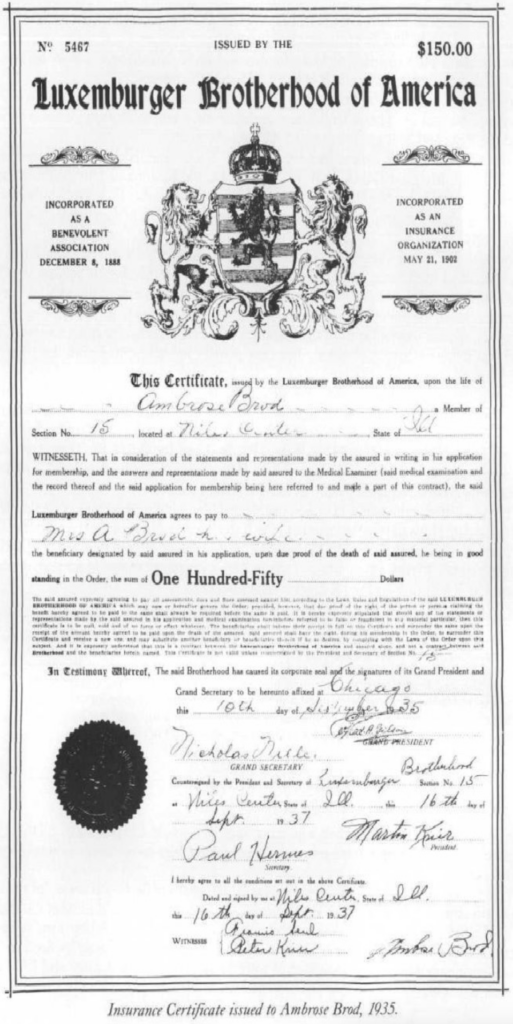
Beginning in 1952, Matt Dechambre was elected President, a post he would hold until 1957. In 1952, the President began receiving compensation for his leadership—$25.00. Scotty Krier was Vice-President; Paul Hermes continued as Recording Secretary; Joe Weber was Financial Secretary; and Bill Biegert, Jr. was Treasurer. The “Grand Old Man” of Section 15, Anton “Tony” Seul—who had joined the Section in October 1905—served as the one-year Trustee.
At the Section meeting held on September 25, 1952, the minutes reflect receipt of a letter from Fred Gilson regarding an upcoming tour to the United States by a group from Luxembourg, sponsored by Emil Weitzl. The letter was noted and placed on file. Weitzl would later come to the United States, meet members of Section 15, and become a close friend to many of them. In later years, he collaborated with members of the L.B.A. in arranging and hosting numerous events of mutual benefit, including the royal visit of H.R.H. Jean to Chicago in 1984.
The Sauerbraten continued to be held each year. Joe Witry, Sr., chaired the 1953 dinner, which was held at the American Legion Hall in Skokie. In 1956, the Sauerbraten was held at the Luxembourg Gardens and continued to be held there until its demise in 1966. After the 1953 Sauerbraten, rather than hosting a private dinner for the volunteers, the Section donated $30.00 each to Mrs. Bill Biegert, Sr., and Mrs. Fred Kastenholtz.
The 1956 Sauerbraten served more than seventy people. To generate interest in the 1957 affair, the following piece of doggerel was placed in the April 27, 1957, edition of the Luxembourg News:
SAUERBRATEN – by Leo Hunsdorfer
Section 15 wishes to on Saturday, May 4 have a dinner just for you a delight is in store.
This date, keep in mind, at the Gardens you will find Sauerbraten, it’s ideal prepared only to appeal to you, friends, and relation accept this invitation.
The committee worked like bees to fill your expectancies.
Joe Weber holds the Chair to this annual affair.
Bill Biegert is in command of the refreshment stand.
Dinner served from 5 to 9 Saturday, May 4, I repeat suggest you come early to dine mark your calendar for a treat.
In 1953, Brother Adam Barnig celebrated his Golden Wedding Anniversary and invited all Section members to a celebration to be held at Deckert’s Hall on June 20, 1953.
In late 1953, Brother Otto Deckert passed away, and his tavern and restaurant were put up for sale. Negotiations were initiated by the Grand Officers, and an agreement was reached whereby each Section of the Brotherhood would purchase stock in a corporation to be organized for the purpose of owning and operating what would become known as Luxembourg Gardens, Inc. In October 1953, a motion was made to invest $2,500.00 in the purchase of Deckert’s Hall. In February 1954, Fred Pesche, Sr., a member of Section 8, addressed the Section and urged its support for the purchase effort. In April 1954, the Section donated drapes and kitchen equipment to the effort, along with a $125.00 contribution for the purchase of coat and hat racks for the cloakroom.
On May 29, 1954, the Luxembourg Gardens opened. At the April 28, 1955, meeting of Section 15, an additional $1,000.00 was invested in the Gardens, and it was agreed that the Section would pay $50.00 annually in hall rent for the privilege of holding its meetings there.
In May 1954, the L.B.A. announced a membership drive and requested that all Sections do their part. Section 15 formed a membership drive committee consisting of Scotty Krier, Frank Becker, Mike Weber, Matt Dechambre, and Nick May. Prizes were to be awarded to Section members who recruited the newest members: first prize, $25.00; second prize, $15.00; and third prize, $10.00. The prizes were to be awarded in December, with induction of the new members to take place at the January 1955 meeting.
Of the thirty-eight new members inducted in the 1950s, twenty were initiated by Grand President Leo Eschette at the January 1955 meeting. Among these new members were Raymond V. Krier; Clem and Luke Meier; Al Koch; William Branagan; Herbert Knutson; Aloysius Hansen; William R. Dahm; and Lawrence F. Molitor, Sr.
In the February 3, 1955, edition of the News, a photograph of the new members appears. The caption states that Scotty Krier won the membership drive contest by recruiting fourteen of the new members and further identifies Section 15 as Skokie’s oldest civic and fraternal organization, having been organized in 1905.
One might expect that Section 15 would have celebrated its fiftieth year with a dinner or other event. There is no indication in either the minutes or the financial records that such an event took place. The only indication that something of significance was occurring is that fifty-year member Tony Seul—who was the twenty-second member of Section 15, the first to join after the twenty-one charter members—was relieved of his obligation to pay dues, a practice that would not receive formal endorsement until May 1958.
The convention delegates for Section 15 in 1957 were Nick May, Steve Zibilski, and Paul Hermes; in 1959, they were Joe Weber, Nick May, and Paul Hermes.
Charitable donations continued throughout the 1950s. Two donations of note were a $100.00 contribution to the Orchard School for Retarded Children and a $50.00 contribution to the victims of the Our Lady of the Angels Fire in 1958.
Several stalwart Section brothers passed away during the 1950s. Nick Weber died in October 1954; Harry Heinz in 1955; and Tony Seul, Michael Klein, and John Weber (not John S. Weber, who resigned in 1965) all passed away in 1956. In 1958, Ambrose Brod died, and at the March 27, 1958, meeting, the members honored his memory with a “standing minute of silence.”
The 1960s were not kind to Section 15. Death removed from its membership rolls many of its most important contributors. In 1967, due to the high cost of holding meetings at the Luxembourg Gardens, the Section began meeting in the homes of its officers. Due to a myriad of other factors, recruitment of new members also stagnated.
Longstanding members who had contributed substantially to the affairs of the Section passed away during this period. In 1961, Mike DeMuth, Anthony Abbink, Louis Nachbauer, and William Meyer died. In 1963, Paul Platz and Peter A. Lanners died, followed by Bill Biegert, Sr., Paul Hermes, and Doc Sintzel in 1964. The latter two were fifty-year members; Hermes was the longstanding Recording Secretary, and Sintzel the physician to Section 15. In 1966, John Engstler, Scotty Krier, and Fred Kastenholtz passed away, followed by fifty-year member Adam Barnig, Bud Krier, Ray W. Haben, and Joe Witry, Sr. in 1967. In 1968, fifty-year member Nick Herff died, as did Clarence Ridley, Hubert Hansen, Michael Hettinger, and James Varallo.
Many of the foregoing were Section officers whose names and contributions are repeatedly recorded in the minutes. They attended monthly meetings, ran the Sauerbraten, and attended L.B.A. conventions, all in the furtherance of heritage and camaraderie.
As in previous years, sons of longtime members became members themselves. In 1963, Leroy Krier—Scotty’s son—joined his father and brothers, Raymond and Martin, Jr., as members of the Section. Joe Witry, Jr., and Donald Hansen joined in 1964. In addition, Joe Dockendorff, Sr., and Joe Dockendorff, Jr. joined the Section at this time, as did George E. Blameuser and George P. Blameuser.
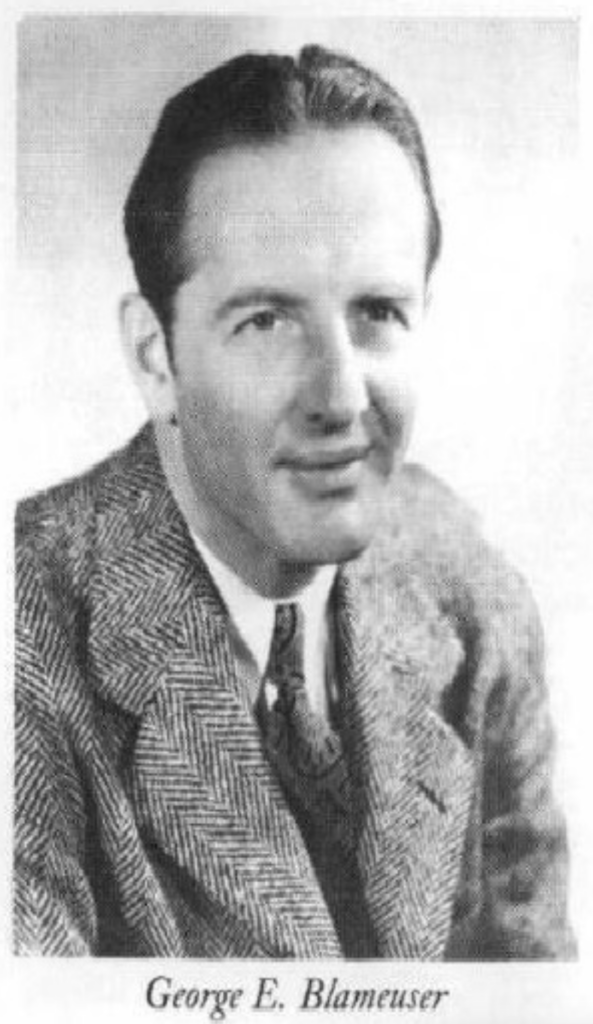
George E. Blameuser (married to Clara Miller) was born in Niles Center in 1898, the son of Peter Blameuser III and Clara Hoffman. After the death of his father in 1907, George succeeded him in operating the Niles Center Coal and Building Material Company, which he ran for many years. In 1922, he was appointed Treasurer of the Village of Niles Center, a position he held until 1933, when he succeeded John E. Brown as Village President. In 1945, George retired from public life but continued to operate the family business and was elected a Director of the First National Bank of Skokie in 1955. In 1961, he transferred to Section 15 from Section 8, which he had joined in 1935. He and Clara had three children, the youngest of whom, George P., joined his father as a Section member in 1961.
George P. Blameuser (married to Dolores Williams) was born in Niles Center in 1929. He presently resides in Mundelein and is an insurance consultant with A.V.M. Financial Services. He and Dolores have five children. George P. succeeded his father as a Director of the First National Bank of Skokie and became the eighth member of Section 15 to hold that position.
Joe Dockendorff, Sr. (married to Frances Blameuser) was born in La Crosse, Wisconsin, on June 29, 1906. A 1933 graduate of the University of Notre Dame, he was the nephew of the late A. J. Wolfgarten, pastor of St. Peter’s Catholic Church in the early 1920s.
Soon after arriving in Niles Center, Joe established an architectural practice at 4831 Oakton Street. In 1936, he married Frances Blameuser, daughter of Peter Blameuser III and sister of George E. Blameuser. They had three children. In 1963, Joe was elected to succeed Paul Hermes as Recording Secretary of Section 15, a position he held until 1975. At the Mass concelebrated by Joseph Cardinal Bernardin and several priests of Luxembourg heritage—attended by T.R.H. Grand Duke Jean and Grand Duchess Joséphine-Charlotte during the 1984 state visit to the United States—Joe served as one of three gift bearers. Joe Dockendorff, Sr., remains active in Section affairs and resides at 7900 Lorel Avenue in Skokie, Illinois.
Joseph J. Witry, Jr. was initiated as a member of Section 15 in 1964. He is the eldest son and third child of Joseph and Catherine Witry. Born in Skokie in 1941, he was educated at St. Peter’s School in Skokie, Notre Dame High School in Niles, and graduated from Parsons College in Fairfield, Iowa, in 1964.
In 1965, he was inducted into the United States Army and spent approximately fifteen months as a chaplain’s assistant in West Germany. While in Europe in 1966, he toured Luxembourg with his father. He was discharged from the Army in 1968 and began a career in the business forms industry with Wallace Business Forms. In 1972, he left Wallace and founded his own company, Unlimited Printing & Systems, Inc., in Arlington Heights, Illinois.
In April 1965, he married Sharon Armstrong of Rock Island, Illinois. They have two children, Joseph Dale and Catherine Ashley, and presently reside in Woodstock, Illinois.
Donald J. Hansen was born in Skokie, Illinois, on September 19, 1941. The eldest son of H. John and Mary Hansen, who were the grandchildren of Hubert Hansen, were all members of Section 15. He attended St. Peter’s School and Notre Dame High School in Niles, Illinois, and graduated from Northwestern University in 1964. In 1958, he joined the U.S. Naval Reserve and was discharged in 1978.
Before joining Western Savings and Loan Association of Chicago in 1972, Don served as general manager of the family homebuilding business founded by his grandfather. He is currently a Vice President of Western Savings and Loan, overseeing its lending and appraisal operations.
In 1976, Don was elected President of Section 15, succeeding his father, John. He held that position for two years before becoming Vice President, exchanging offices with Joe Dockendorff, Jr. In May 1980, Don was appointed to fill the office of Grand Secretary, succeeding Don Johanek. He thus became the second member of Section 15 to hold a Grand Lodge office.
Don is married and has two children: Dawn, a 1987 graduate of Miami University of Ohio, and Timothy, a student at the University of Wisconsin.
Also in 1964, Victor M. Colling transferred from Section 3 to Section 15. A native of Feulen, Luxembourg, he is the son of the late Othen Colling and Anne Stempel Colling. During World War II, the Colling home was used by German forces as a local post office. In 1944, the German occupation was replaced by American liberation, and the kindness of U.S. troops inspired Victor’s desire to come to the United States—a dream he realized in 1958.
Soon after arriving in the United States, he began working at a small bakery in Morton Grove. He later moved to Gapers Catering, where he managed the bakery department for twenty-five years. He is presently employed by Sara Lee Kitchens. He, his wife Josephine, and their daughter Bettina reside in Glenview, Illinois.
In 1966, Joseph A. Dockendorff, Jr. (married to Beverly Donner) joined Section 15. The second child of Joseph and Frances Dockendorff, Joe, Jr., was born on October 2, 1940, in Niles Center, Illinois. He was educated at St. Peter’s School in Skokie, Holy Cross Seminary in La Crosse, Wisconsin, and received a B.S. in Business Administration from Marquette University in 1962. He enlisted in the U.S. Army in 1963 and was stationed in Nürnberg, Germany, where he served as a chaplain’s assistant. While there, he developed a close relationship with an orphanage in Feucht, Germany, donating excess Army rations to the children.
Upon his discharge in 1965, Joe, Jr. returned to the United States and began working at Sears, where he remained until 1974. He then left to join his lifelong friend, Joe Witry, Jr., in the business forms industry, in which he remains employed.
Joe and Beverly live in Arlington Heights, Illinois, with their three children: Mark, Matthew, and Carrie. In 1976, Joe, Jr. was elected Financial Secretary; in 1977, he became Vice-President; and in 1978, he was elected President—a post he still holds.
The Section continued to meet monthly, on the fourth Thursday, at the Luxembourg Gardens. The minutes reflect the attendance of L.B.A. members from other Sections at many of these meetings.
Rostered membership in 1961 remained at sixty-nine. Under the laws of the L.B.A., the Section was entitled to at least three representatives at conventions. In 1961, Nick May and Ted Conrad were selected to attend the convention; they were followed by Frank Becker and Roger Origer in 1963; Lawrence Weber and John Hein in 1965; George E. Blameuser, John Hansen, and John Hein in 1967; and George E. Blameuser, Joe Weber, and Joe Dockendorff, Sr. in 1969.
The Sauerbraten, which had begun in 1940 as the Hasenpfeffer, continued to be held during the 1960s at the Luxembourg Gardens. The 1962 Sauerbraten yielded a profit of $1,136.32 for the Section. In 1965, rather than awarding door prizes, the Section offered cash prizes of $100.00, $75.00, $50.00, $25.00, and $10.00. Tickets were limited to 300 and sold for $3.75 each. The final Sauerbraten dinner was held in 1966 at the Gardens.
No reason is recorded for the discontinuance of the Section’s principal fundraiser. However, by 1967, Section membership had declined to fifty-three, and six members either died or were dropped from the rolls during that year. In addition, the roster showed three members living outside Cook County. It would therefore appear that the Section no longer had a sufficient number of active members to host a Sauerbraten.
In addition to the Sauerbraten, private dinners for members and their spouses continued. In 1963, Adam Barnig’s daughter, Barbara Eley, hosted one such private dinner at the Gardens. In appreciation of her efforts, Barbara was given a cash gift of $15.00.
At the Section meeting held on October 24, 1963, Joe Witry, Sr., proposed that a Christmas party be held for the children and grandchildren of Section members. The proposal was warmly received, and a committee consisting of Joe and Lawrence Weber, George E. and George P. Blameuser, and John Hein was appointed to make the arrangements. On December 22, 1963, the author—accompanied by his father—attended the party and immediately recognized John Hein as Santa Claus.
John Hein, a resident of Chicago, joined Section 15 in 1958. A native of Germany, he earned his livelihood as a salesman, but his avocation was singing. He was a member of the Schubert Singing Society of Chicago and, together with the late Mel Weides of Section 3, formed a powerful duet of deep, rich baritone voices. A large, gentle-natured man, he was ideally suited to portray Santa Claus. John also served as a Director of the Luxembourg Gardens. He continued to fulfill his Section duties until 1982, when he was no longer able to drive. Shortly thereafter, he passed away.
A second Christmas party was held in 1964 at the Gardens. For reasons unknown, the event was subsequently discontinued.
By 1967, with the Sauerbraten discontinued, the Section searched for a substitute fundraiser. In March 1968, it was decided to hold a Fall Festival in October at Annie Krieger’s in Chicago. Cash prizes were awarded, and drinks were priced at twenty cents for beer, sixty cents for a shot of Scotch or Canadian whisky, and fifty cents for a shot of any other liquor. Don McNett, Don Hansen, and Joe Dockendorff, Sr. served as bartenders, while George E. Blameuser acted as ticket custodian. The dance was held and generated net receipts of $331.60. It proved to be the final fundraiser conducted by Section 15.
At the November 1962 Section meeting, one agenda item concerned an upcoming card party to be held at the Gardens for the benefit of Bishop Kinsch, a priest of Luxembourg ancestry serving as a missionary in Congo. In addition to urging members to attend, the Section donated $25.00 to the bishop’s relief fund. During this same period, the Orchard School for the Retarded continued to receive donations from the Section.
In 1962, Paul Hermes—Recording Secretary since 1913—became ill. As his health declined, other members, including Bill Biegert, Jr., and Joe Witry, Sr., assumed responsibility for recording the minutes. In December 1962, Paul declined to stand for re-election as Recording Secretary. In appreciation of his service, the Section presented him with an embossed scroll and a $50.00 gift certificate. To succeed Paul Hermes—whose contributions as Recording Secretary were without parallel (and whose handwriting was unfailingly legible)—the Section elected Joe Dockendorff, Sr.
Several issues affecting the Grand Lodge and all Sections arose during the 1960s. As previously noted, the L.B.A. was incorporated in 1888 as a benevolent, charitable, and social organization. In 1902, it was enrolled by the State of Illinois as a Fraternal Beneficiary Society to provide “pecuniary benefits to beneficiaries of deceased members or accident or permanent disability indemnity to members.”
As an outgrowth of these insurance benefits, the L.B.A. paid sick benefits to its members, which during the 1940s and thereafter typically amounted to $5.00 per week. In 1963, the Grand Lodge discontinued this benefit, though individual Sections were free to continue payment. At the September 1963 meeting, the matter was tabled for further discussion; however, subsequent minutes show no further action. At the January 23, 1964, meeting, Grand Secretary Harry Trausch reported that the Grand Lodge had discontinued sick benefits. Section 15 apparently concurred, as the expense books show no disbursements for this benefit in any subsequent year.
A second issue confronting Section 15 concerned the location of its monthly meetings. Beginning in 1954, meetings had been held at the Luxembourg Gardens. By early 1967, however, many members felt that the cost of refreshments and food there had become prohibitively expensive. At the May 25, 1967, meeting, John Hansen proposed that meetings be held in the homes of officers beginning September 27, 1967. At that initial home meeting, further discussion took place, and inquiries were made regarding the availability of the Lincolnwood V.F.W. hall. Joe Witry, Jr., was tasked with meeting Steve Heinz, then Grand President, while John Hansen was to meet with Nick Hoffmann in an attempt to resolve the impasse with the Gardens. These efforts were unsuccessful, and the Section continued meeting in members’ homes until 1978, when quarterly meetings and dinner meetings were instituted.
Two related matters also received attention. At the 1967 Grand Lodge Convention, an effort was initiated to revive the Luxembourg News. A proposal was made to assess each Lodge member $4.50 and provide a subscription to the publication. The Section minutes do not reveal the outcome of this proposal.
In 1968, Section 15 owned 180 shares of stock in the Luxembourg Gardens. As the Gardens’ operations fell into disarray and a movement arose to sell the building and grounds, the Section elected to sell its shares at the agreed price of $15.00 per share. The sale was completed, and the Luxembourg Gardens ultimately gave way to Villa Toscana, an Italian restaurant still operating at 6211 Lincoln Avenue in Morton Grove. Thus, Mueller’s Hall begot Deckert’s Hall, which begot the Luxembourg Gardens, which in turn begot Villa Toscana.
The practice of recording the deaths of members in the Section minutes appears to have been abandoned in 1964, as the minutes make no mention of the death of Doc Sintzel or of subsequent members, although resolutions of condolence continued to be published in the Luxembourg News.
At Grand Lodge meetings held in early 1969, a proposal was introduced to dissolve the Grand Lodge and distribute its assets in accordance with insurance laws. Each insured member would receive $150.00, with the remaining funds distributed pro rata among the Sections based on membership. Later that year, George E. Blameuser and Joe Dockendorff, Sr., attended a special Grand Lodge convention with instructions to vote against dissolution. The motion was defeated, and the Grand Lodge survived. However, the requirement to pay quarterly dues to the Grand Lodge was discontinued in February 1970.
In September 1970, former President Matt Dechambre passed away, followed by Frank Becker in November.
As with many clubs entering the 1970s, membership in Section 15 steadily declined. Only four new members joined after 1971: Richard J. Witry, Lawrence F. Molitor, Jr., John W. Haben, and John J. Jung. Death continued to diminish the Section’s vitality. Peter Endre died in 1971, Steve Zibilski in 1972, Peter Frees and Mike Weber in 1973 (the latter a fifty-year member), Henry Weber in 1974, Andy Greiner in 1978, H. John Hansen in 1979, and George E. Blameuser in 1980.
Richard J. Witry (married to Patricia Lewis) was born on April 8, 1950. The fourth child of Joseph and Catherine Witry, he became the third Witry to join Section 15 in 1973. Raised in Skokie, he attended St. Peter’s School and Loyola Academy and graduated from Holy Cross College in Worcester, Massachusetts, in 1972. In 1976, he earned his law degree from John Marshall Law School in Chicago and began practicing law with McCarthy, Duffy, Neidhart & Snakard, the firm in which his father had been a partner.
In 1978, Richard was appointed by the Luxembourg government as Vice-Consul in Chicago, with jurisdiction over Illinois, Indiana, and Wisconsin. In 1980, he was named a Chevalier of the Order of Merit of the Grand Duchy of Luxembourg by Grand Duke Jean.
Influenced by his politically active father and older sister, Joan W. Gorner, Richard became active in Skokie politics. In 1979, he ran for and was elected Commissioner of the Skokie Park District, defeating his opponent decisively. He served one six-year term, which concluded in 1985. He was the fourth member of Section 15 to hold a commissioner’s post, following John Kalmes, Ben Schaul, and Henry N. Weber.
It was previously noted that in 1952, Emil Weitzl, a Luxembourg-based travel agent, informed Section 15 of his group’s planned visit to Chicago. A friendship formed between Weitzl and Joe Witry, Sr., which later extended to Richard Witry. When Joe Witry, Sr. died in 1967, all knowledge of his Luxembourg ancestry appeared to have been lost. On numerous occasions, Richard was asked whether he had relatives in Luxembourg, to which he replied that he was unaware of any.
In October 1984, in preparation for the Grand Duke’s state visit to Chicago, Consul Stephen Heinz and Vice-Consul Witry spent four days in Luxembourg meeting with government officials. On the final day, after concluding their meetings, Witry expressed to their host, Emil Weitzl, his desire to visit the George S. Patton, Jr. Memorial Museum in Ettelbrück. Weitzl explained that the museum was closed for the season but said he would attempt to make arrangements.
Heinz, Weitzl, and Witry traveled to Ettelbrück and met with Leon Scher in an effort to gain admittance. Speaking Lëtzebuergesch, Weitzl introduced the group to Scher. After several seconds of conversation with Weitzl in his native tongue, Scher addressed Witry in English, stating that he had known a Joseph Witry from Chicago and proceeded to describe him. Witry replied that the man described was Joseph Witry, Sr., his father. Scher then responded, “My mother and his father are first cousins.”
Stunned, Richard Witry turned to Weitzl and said he could not believe what he had just heard. Both Weitzl and Heinz assured him that they were equally surprised, but Witry remained unconvinced.
Scher telephoned his home and asked his wife to bring his mother to their residence. After completing their tour of the Patton Museum, the group accompanied Scher to his home. Within moments of their arrival, Anna Scher entered the house. After exchanging greetings, the first thing she did was remove from her purse a photograph of Joseph Witry, Sr. Any remaining doubt vanished. Seventeen years after his father’s death, Richard Witry had discovered his Luxembourg roots in Ettelbrück, Luxembourg.
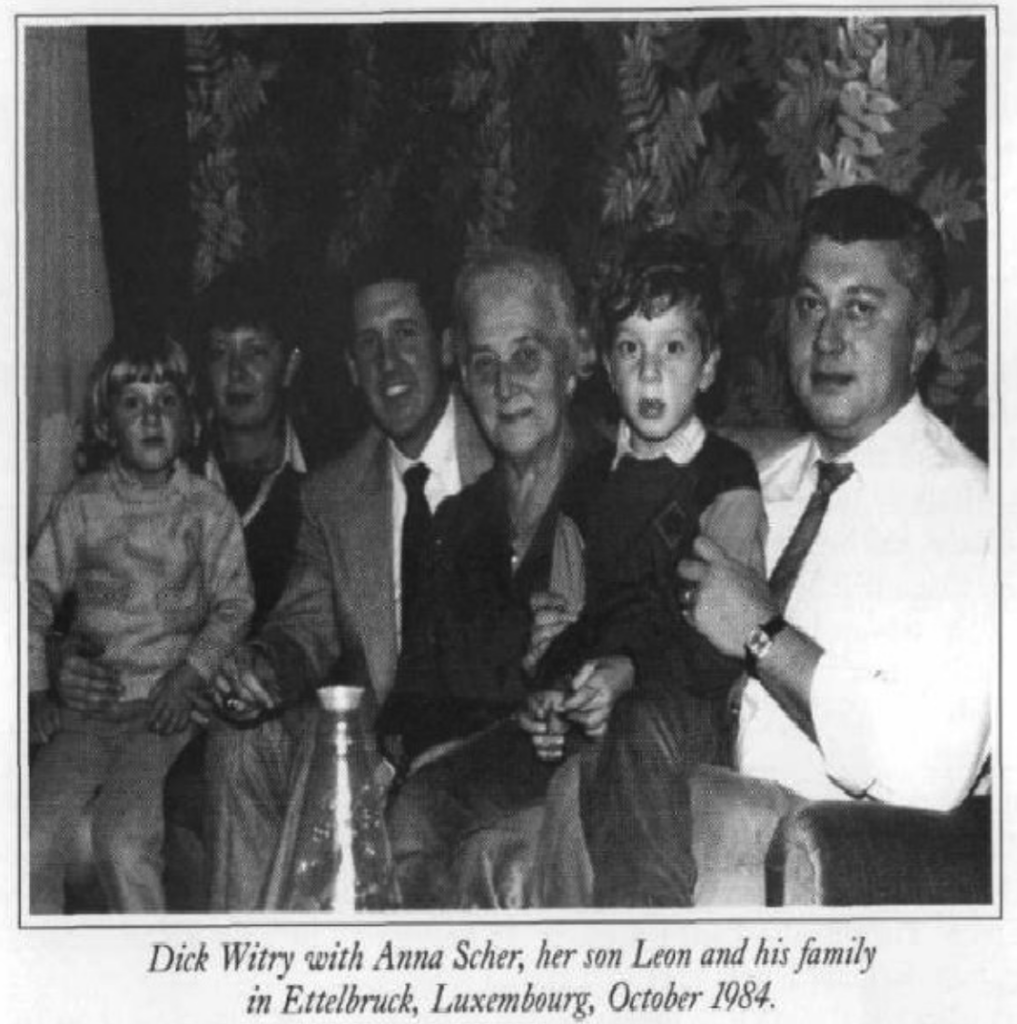
Dick is currently the Financial Secretary of Section 15, a post he has held since 1977. He also serves as Vice President of the Skokie Historical Society and is a Third Degree Knight of Columbus with the Skokie Council. He, his wife Patricia, and their son Daniel Joseph reside in Skokie.
Lawrence F. Molitor, Jr. (married to Nadine Baldwin) was born on November 7, 1949, in Skokie. He is the oldest child of Lawrence F. Molitor, Sr., a former Section 15 member, and the late Patricia Standaert Molitor. Larry was educated at St. Peter’s and St. George High School in Evanston and is a 1971 graduate of Christian Brothers College in Memphis, Tennessee, where he earned a degree in civil engineering. Upon graduation, he worked for the Cerniglia Company of Melrose Park, a construction firm specializing in sewer and pipe work. After leaving the Cerniglia Company, he joined MC Powers, a Skokie-based industrial firm specializing in the nuclear power industry. Larry and Nadine reside in Skokie with their two sons, Paul and Scott. Larry currently serves as the Recording Secretary of the Section.
John W. Haben (married to Mary Anne McNulty) was born on October 1, 1956, in Skokie. The second child of R. William and Barbara Wilson Haben, he is the grandson of Ray W. Haben, who was a Section member for thirty-four years.
John was educated at St. Peter’s, Loyola Academy, and Miami University in Oxford, Ohio. Following his graduation from college, he attended Worsham Embalming School in Chicago and joined his father and grandmother in operating the family business, Haben Funeral Home, which was founded by his grandfather in 1923. He is currently a member of Rotary, the Knights of Columbus, and Skokie Valley United Way. John and his wife, Mary Anne—who is of Luxembourg ancestry on her mother’s side—reside at 8051 Lincoln Avenue in Skokie, Illinois, with their three children: John Jr., Peter, and Clare.
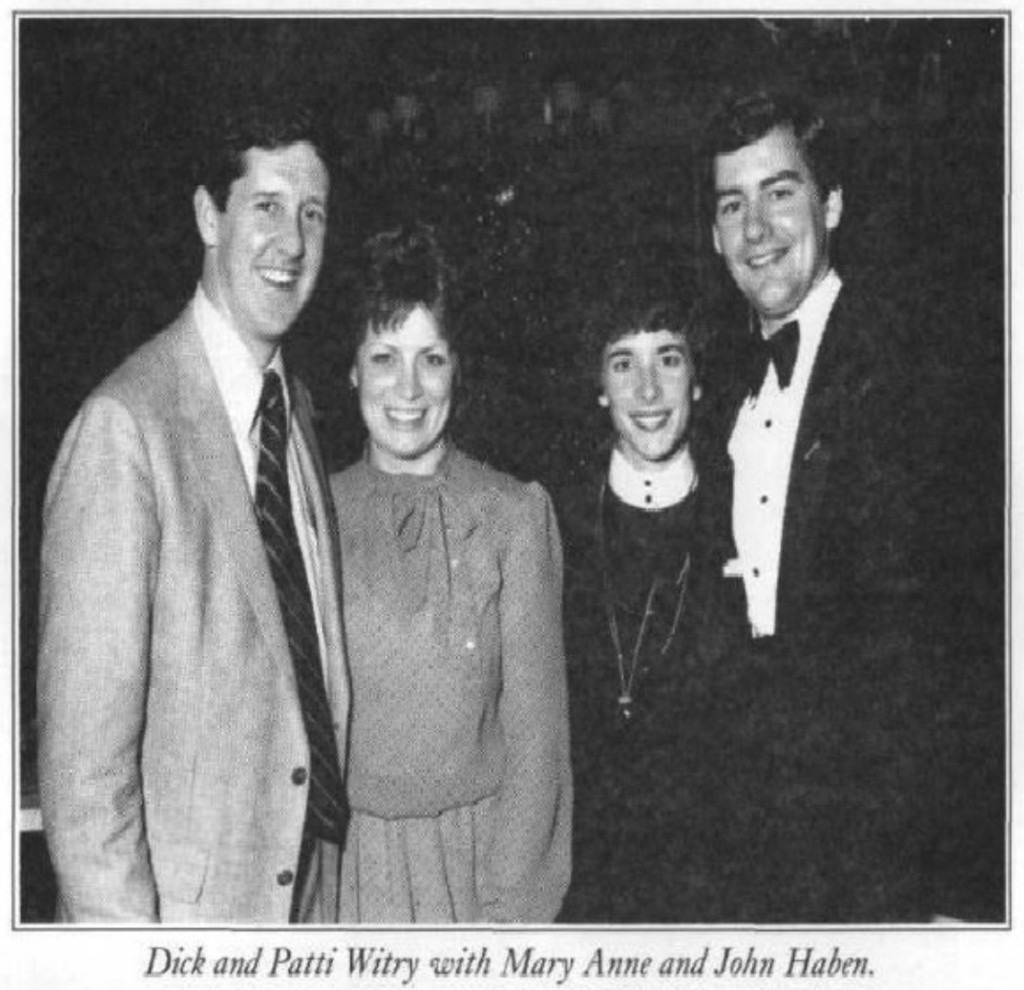
John Joseph Jung, C.M., was born on May 31, 1950. He is the second child of John P. Jung and Dorothy May Jung, both of Evanston. In 1955, the Jung family moved to Skokie. Known as Jay, he graduated from St. Peter’s in 1964. That year, he entered the Vincentian Seminary High School in Lemont, Illinois, and in 1968 began his novitiate. In 1973, he graduated from St. Mary’s Seminary in Perryville, Missouri, and was ordained a priest on June 4, 1977.
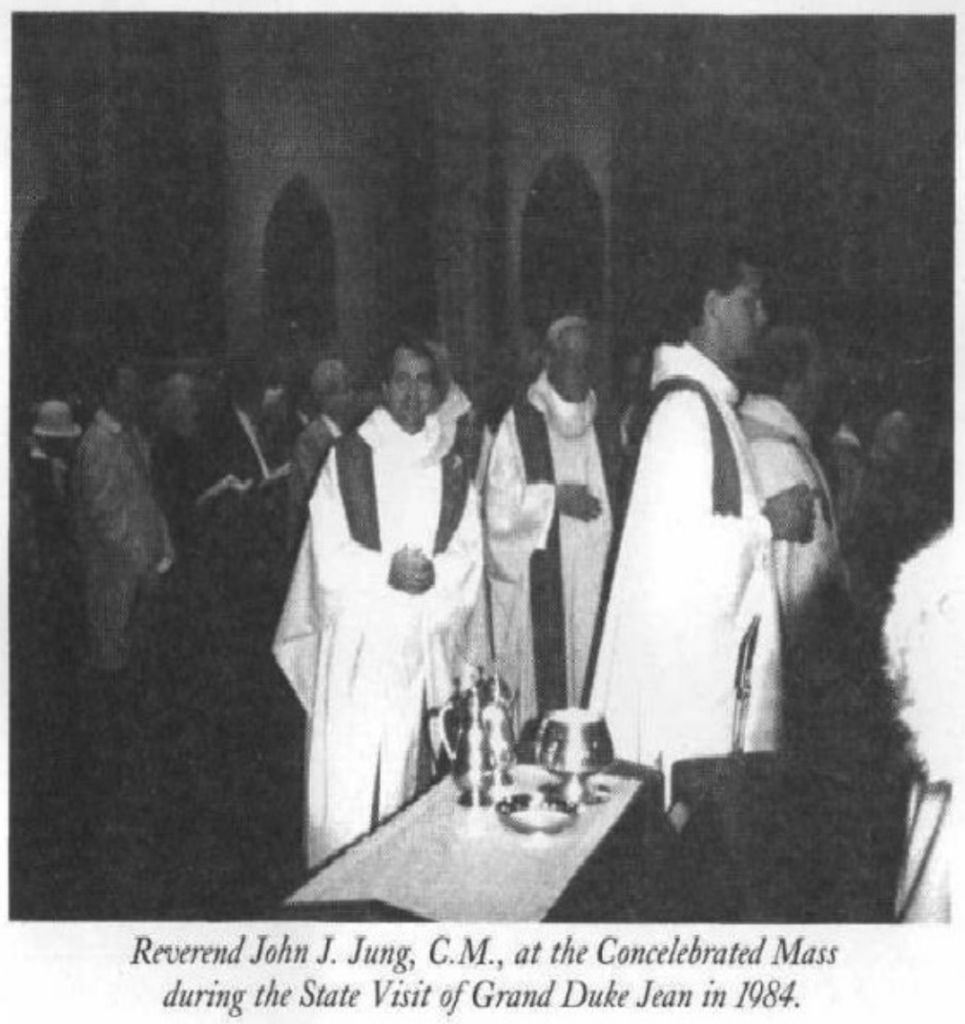
Following his ordination, Jay returned to Lemont, where he served as Director of Admissions for the Vincentian Seminary program. In 1983, he was assigned to DePaul University as a counselor, and in May of that year was appointed Provincial Consultor for the Midwest Province. His duties included advising the Very Reverend John Gagnepain, C.M., Midwest Provincial, on all aspects of the Vincentian Order. Jay’s Luxembourg roots were well represented in the L.B.A.: his grandfather, Matthias Jung, was a member of Section 3, and his uncle, Nicholas Jung, is a member of Section 8.
During this period, the Section met quarterly at the homes of its members. In the late 1970s, the Section initiated dinner meetings that included spouses and continued to support the activities of the Grand Lodge, most notably the 1973 visit of Bishop Hengen, the 1976 visit of the Grand Duke, and the 1984 state visit of the Grand Duke and Duchess to Chicago.
As noted at the outset of this essay, it was intended as a celebration of the accomplishments of the men who comprised the Section’s membership over the last eighty-two years. The reasons for joining an organization are as varied as the grains of sand on a beach. Some men were proud of their Luxembourg heritage; others sought the companionship of fellow Luxembourgers or the business and political contacts that membership could provide. Unfortunately, many individuals listed on the roster joined only briefly and later withdrew. Others maintained their membership but rarely attended meetings or participated in the affairs of the Section. In researching the minutes and other documents for this essay, the contributions of many members were readily apparent. This history is especially dedicated to the following men in recognition of their devotion to Section 15.
| Henry Hermes | Anton Krier, Sr. | Michael Hermes |
| Gustave Frisch | John Kalmes | Nick Hermes |
| John Wagner | Joe Puetz | William Hensel |
| Frank Hoveley | J.P. Wagner | George Busscher, Jr. |
| Benjamin Schaul | Valentine Krier | Martin ‘Scotty’ Krier |
| Bill Biegert, Sr. | Ambrose Brod | Lawrence Weber |
| Nick Herff | Nick May, Sr. | Michael Weber |
| John Origer | Henry N. Weber | Matt Dechambre |
| George E. Dockendorff, Sr. | John Hein | Michael S. Conrad |
| Anton Doetsch | August Luettig | Joseph Hohs |
| John P. Schaul | Nicolas Schaefer | Peter Puetz |
| Peter Dahm | Michael Leider | Peter A. Hohs |
| Anton “Tony”‘ Seul | Rudolph V. Sintzel, MD. | Ivan M. Paroubek |
| Paul Hermes | Francis ‘Pat’ Seul | Nicholas Kalmes |
| Joseph Weber | H. John Hansen | Joseph J. Witry, Sr. |
| Bill Biegert, Jr. | Adam Barnig | Paul M. Platz |
| Harry Heinz | Steve Zibilski | Donald J. Hansen |
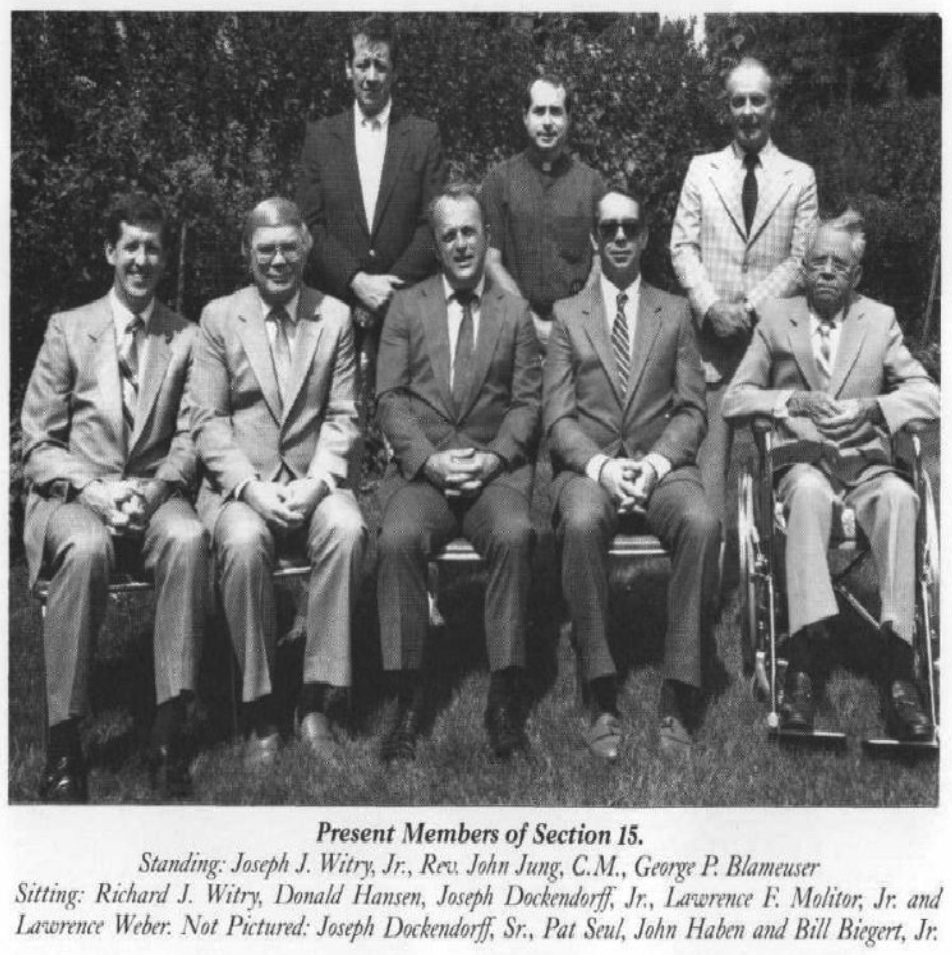
In 1990, under the leadership of President Larry Molitor, Jr., Section 15 decided to revive the Sauerbraten after a twenty-three-year absence. Held at the Skokie VFW Hall on June 2, 1990, the event was well received by the Luxembourg-American community. Except for one year, when a suitable venue could not be secured, the Sauerbraten has been held annually ever since. Section 15’s two Davids—President David Leider and Financial Secretary David Hook—have taken the lead in preparing for and hosting the Section’s annual dinner dance. It is fair to say that without their leadership, the Sauerbraten would not be the success it is today.
More recently, Section 15 has assumed leadership in organizing the adoration of the Blessed Virgin Mary, Our Lady of Consolation, the Patroness of Luxembourg. A statue of Our Lady is enshrined at the Carmelite Monastery in Des Plaines. The statue was a gift from the late Luxembourg Bishop Léon Lommel.
Members of Section 15 have played prominent roles in the affairs of the Brotherhood over the past twenty-five years. The Section has produced two Grand Presidents—Donald Hansen and Linda Hansen Heinz; one Grand Vice President—Linda Hansen Heinz; and six Grand Secretaries: Don Hansen, Larry Molitor, Jr., Dick Witry, Barbara Hames, Linda Hansen Heinz, and Lenore Pettinger.
Four members have served in the Luxembourg diplomatic corps: Dick Witry as Consul, Don Hansen as Consul General, Ethan Hastert as Consul, and Mike Ansay as Consul in Wisconsin. Sister Gerda Hansen, an Austrian by birth, serves as Austrian Consul for the State of Florida. Seven members have been awarded the Steven Heinz Award. Four members of Section 15—Don Hansen, Dick Witry, Mike Ansay, and Kevin Wester—have been decorated by the Luxembourg government, the latter two for their work with the LACS. Section 15 continues to meet on a quarterly basis.
Section 15’s First Woman President
More than a century after John Schmit presided over the Brotherhood’s first organizational meeting on October 23, 1887, his descendants would again stand at the forefront of its history.
On February 15, 1996, the Luxembourg Brotherhood of America Supreme Assembly approved a landmark amendment allowing individual sections, at their discretion, to admit women as members. The decision marked a turning point in the organization’s evolution while honoring its founding spirit of mutual support and cultural preservation.
Twenty-two years later, on January 14, 2018, Jean Caroline (Schmit) Spagnoli — great-granddaughter of founder John Schmit — took the Oath of Office as the first woman president of Section 15.
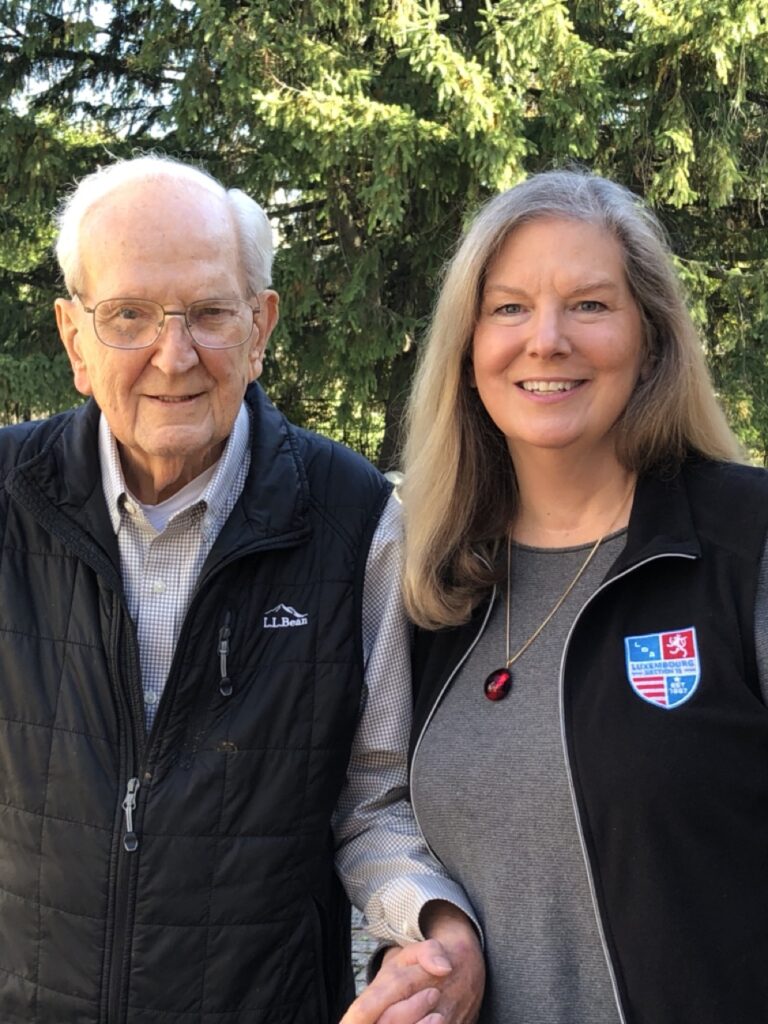
Below is Jean Caroline (Schmit) Spagnoli’s acceptance speech on January 14, 2018:
This is a historic day for Section 15, I am the first women to be installed as a section president of the Luxembourg Brotherhood of America. What would my great-father’s think? My great-grandfather, Johann Schmit, immigrated from Echternach, Luxembourg in 1875 at the age of 18 years old to work on a relative’s farm in Ohio. Johann and his wife, Caroline Paltz (from Lintgen, Luxembourg) had their first child in 1883, then living on the south side Chicago. Five years later, the Luxemburger Bruderbund (a mutual aid society), was organized on October 23, 1887, and later incorporated on December 8, 1888.
The first officers were Johann (John) Schmit, president and Nicholas Stieren (Stirn), vice president. Nicholas was Johann’s brother-in-law, married to his wife’s sister. A family affair, as it is today – we are all related, if not biologically, then by our desire to celebrate our heritage and the Luxembourg culture.
I am a fourth generation LBA member with my great-grand father Johann, my grand-father Albert J. Schmit and my father Arthur B. Schmit all being LBA members. Another event that made possible this day was in 1996, then the LBA Supreme Assembly approved an amendment to permit each section to admit women, at the section’s discretion. Thank you, Section 15.
This year marks the 130th anniversary of the incorporation of the Luxembourg Brotherhood of America. Did my grandfather and the other founders ever believe the organization would still be in existence 130 years later? Amazing the longevity of the LBA.
As president of Section 15, I will do my best to help keep the group going strong, so there are many more LBA anniversaries in the future.
Jean Spagnoli represents the fourth generation of her family’s membership in the Brotherhood:
- John Schmit (1857–1920) — Organizing Founder and 2nd Grand President
- Albert J. Schmit (1887–1960) — Section 3
- Arthur B. Schmit — Section 15
- Jean Caroline (Schmit) Spagnoli — Section 15 President (2018)
And with the induction of Anthony M. Spagnoli in 2014, the fifth generation joined the ranks of the LBA.
Today, as Section 15 continues to grow — carrying forward traditions first established in 1887 — the Schmit family’s five-generation commitment stands as living proof that the Brotherhood’s mission endures.
Below is a gallery of Section 15 Members throughout the years!
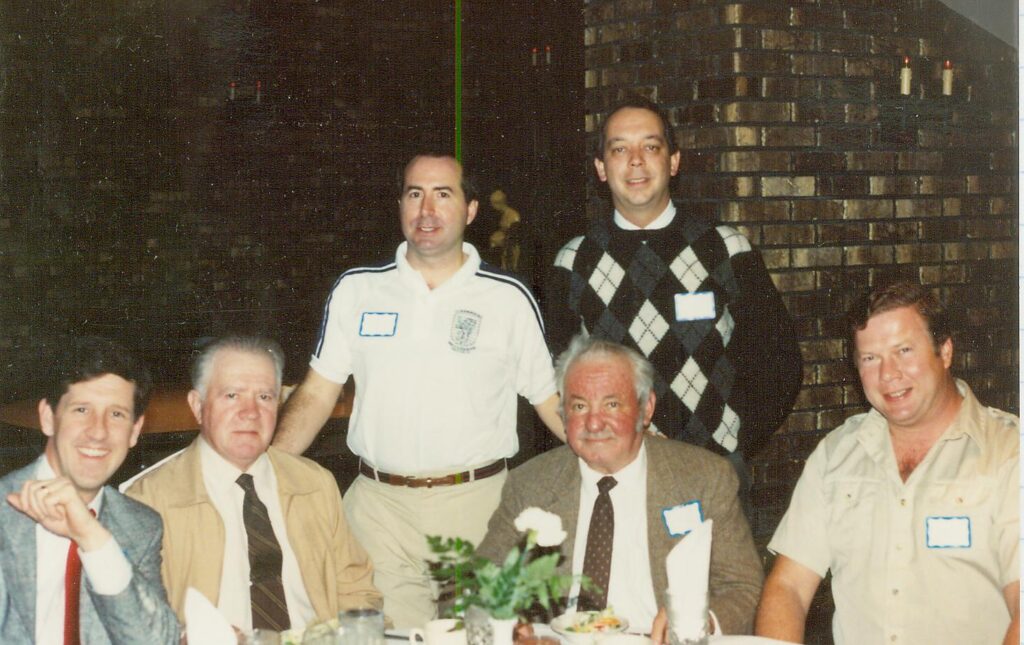
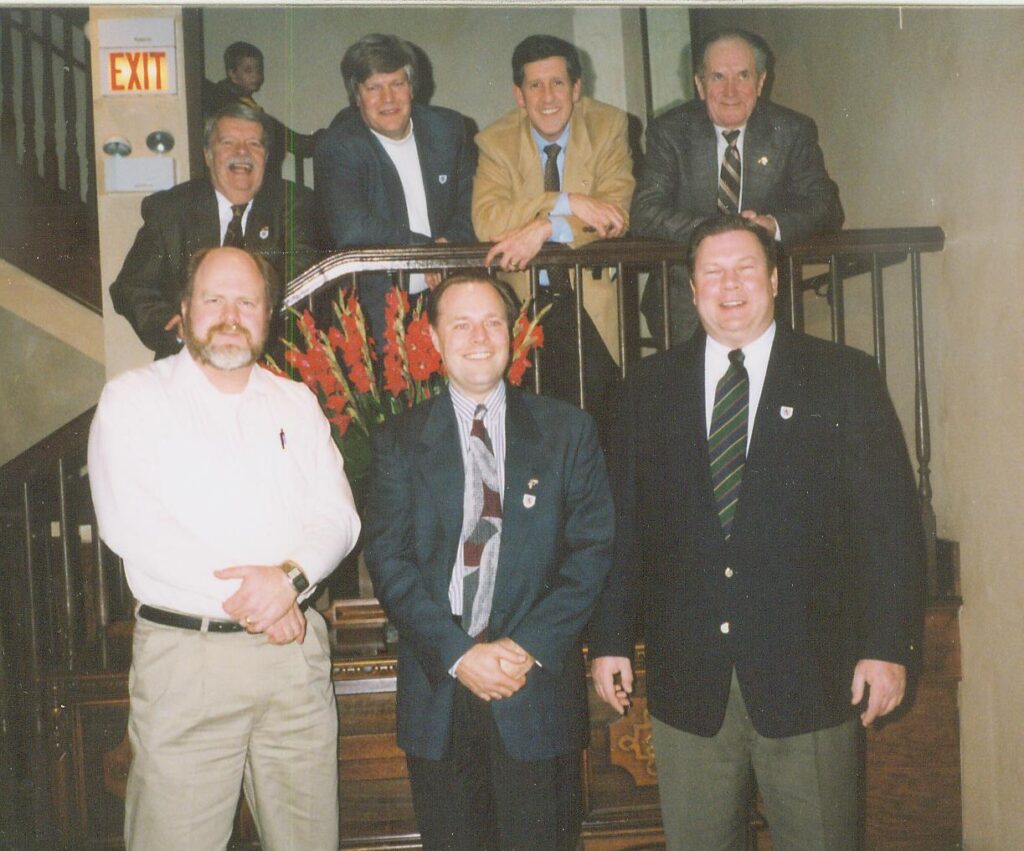
Top Row: George Meyers, David Hook, Dick Witry, Lucien Mehring
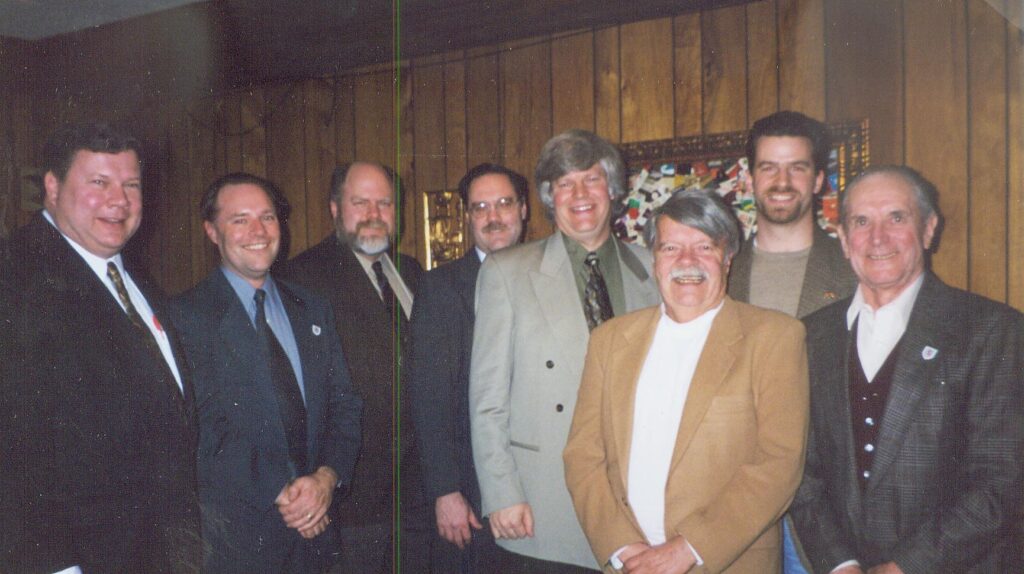
George Meyers, Jonathan Buck, Lucien Mehring
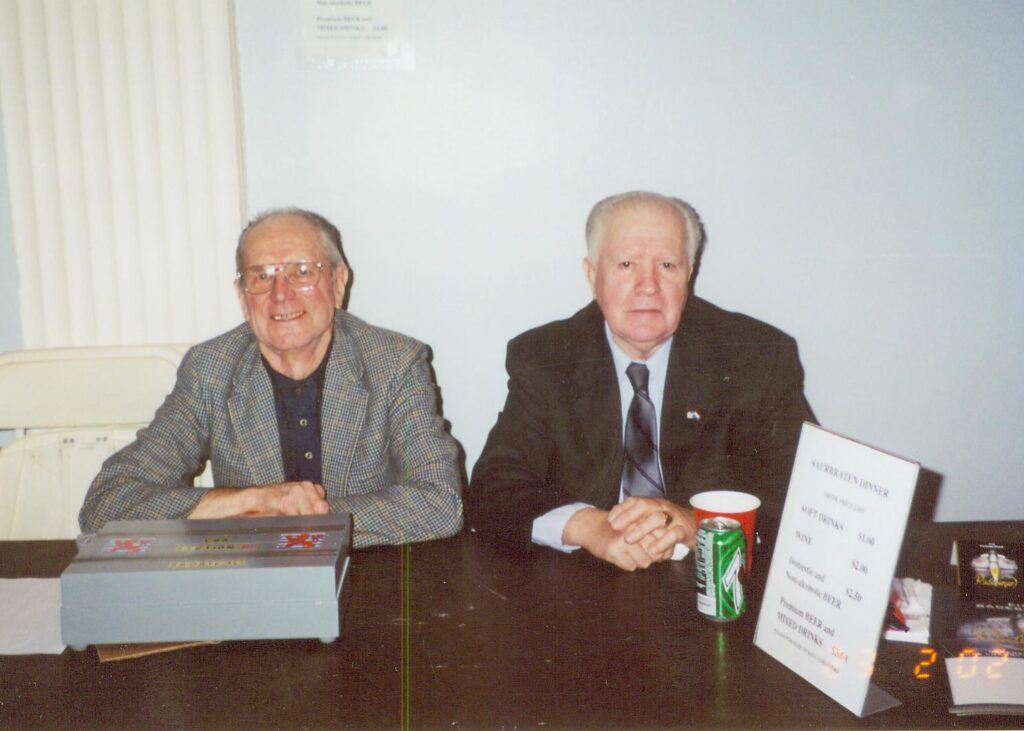
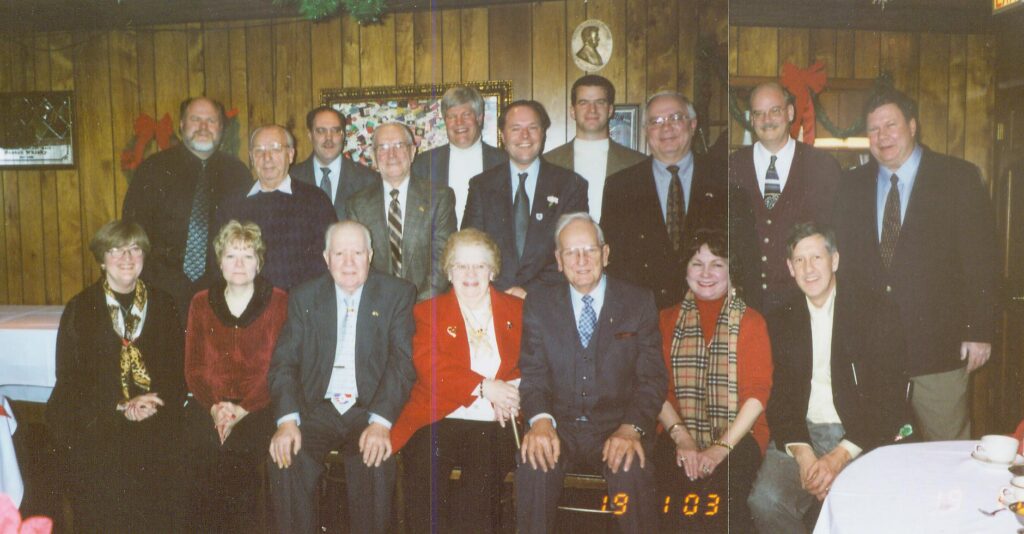
Art Schmit, Pamela Heinz, Dick Witry.
Back Row: Steve Heinz, Victor Colling, Daniel Leider, Lucien Mehring, David Hook,
David Leider, Jonathan Buck, Don Hansen, Bob Hansen, Jon Heinz
L-R: Martin Leider, Cari Hansen, Bob Hansen, John Haben, Jon Heinz, Pam Heinz, Barbara Hames, Steve Heinz, Tom Pettinger, Lenore Pettinger, David Leider, Mrs. David Leider,
David Hook, Gerda Hansen, Don Hansen, Patti Witry, Daniel Leider, Dick Witry
Seated L-R: Mary Ann Haben (white sweater), Marguerite Heinen (blue dress),
Linda Heinz, Mathias Heinen
Dick Witry, Nick May, Jon Heinz
Deborah Heinen, Jean Spagnoli.
2nd Row standing: Lenore Pettinger, Carol Jung, Bob Walton, Jacqui Walton, Chris Walton,
Lauren Walton, Mike Spagnoli
Jean Spagnoli, Mike Spagnoli, Bettina Swanson, Harry Swanson
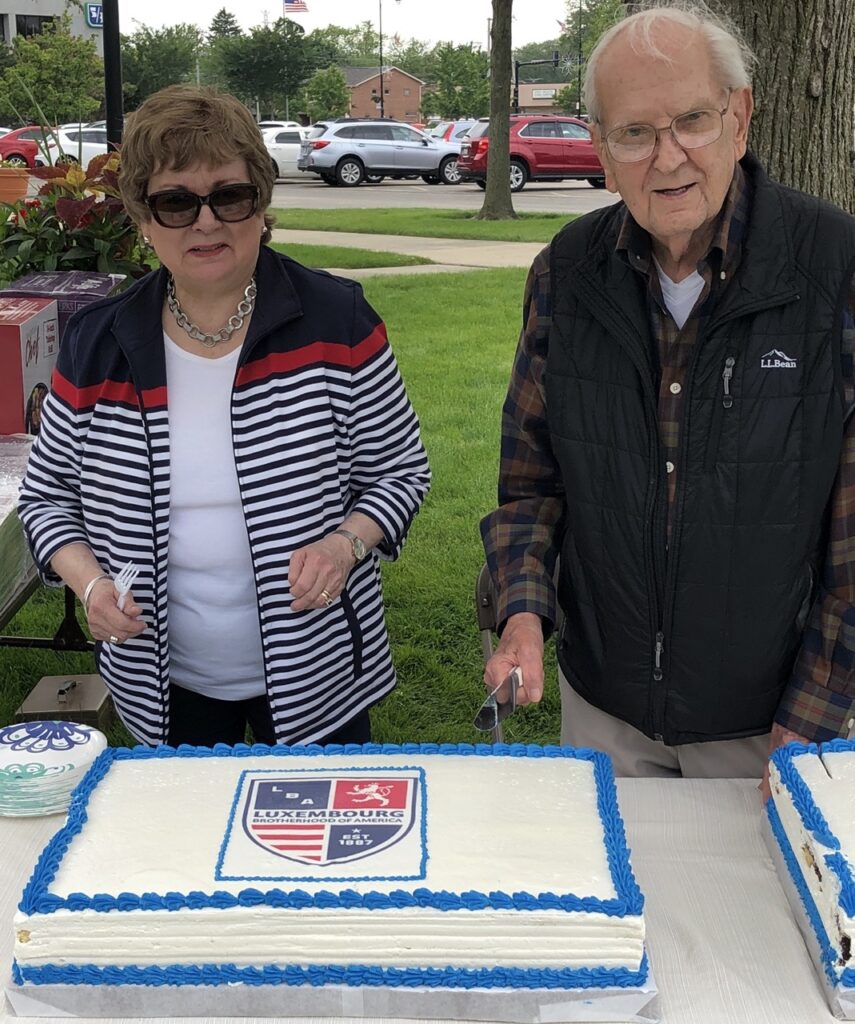
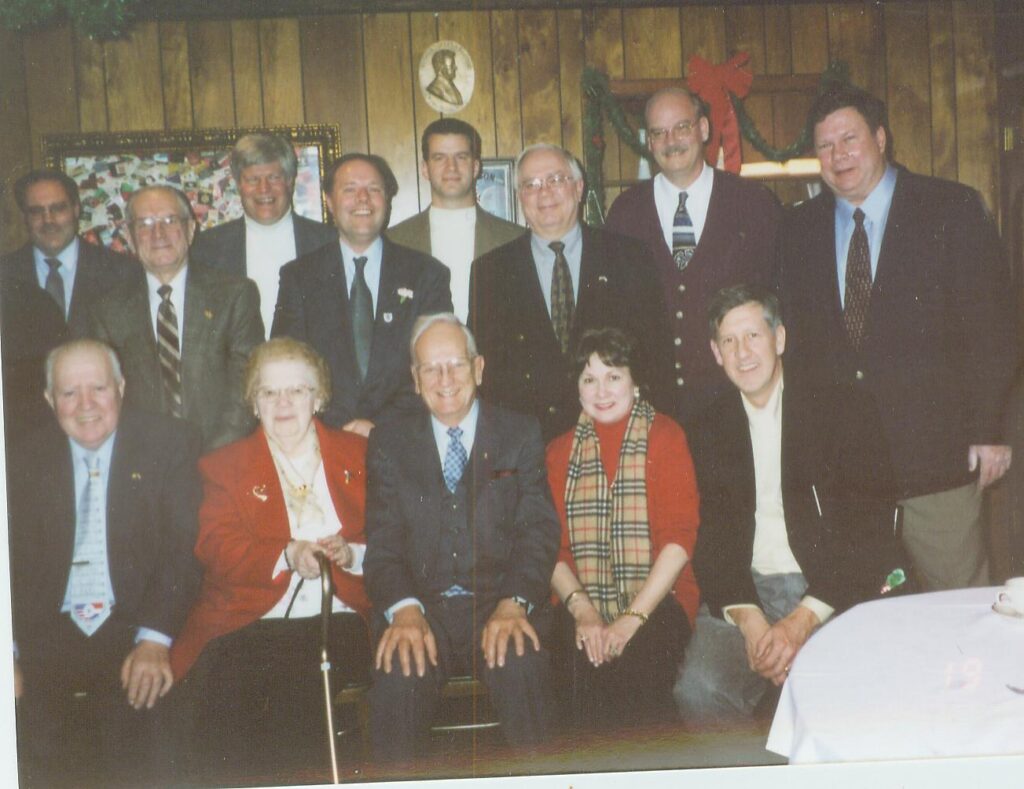
Standing: Daniel Leider, Lucien Mehring, David Hook, David Leider, Jonathan Buck,
Don Hansen, Bob Hansen, Jon Heinz
David Leider, Lucien Mehring, George Meyers, Daniel Leider
You’ve made it to the end! Thank you for your interest in the history of Section 15!
If you have any information you’d like to contribute, can help identify individuals in photos that are not yet captioned, or would like to suggest historical corrections, please feel free to reach out to me at: [email protected]
Recent Comments